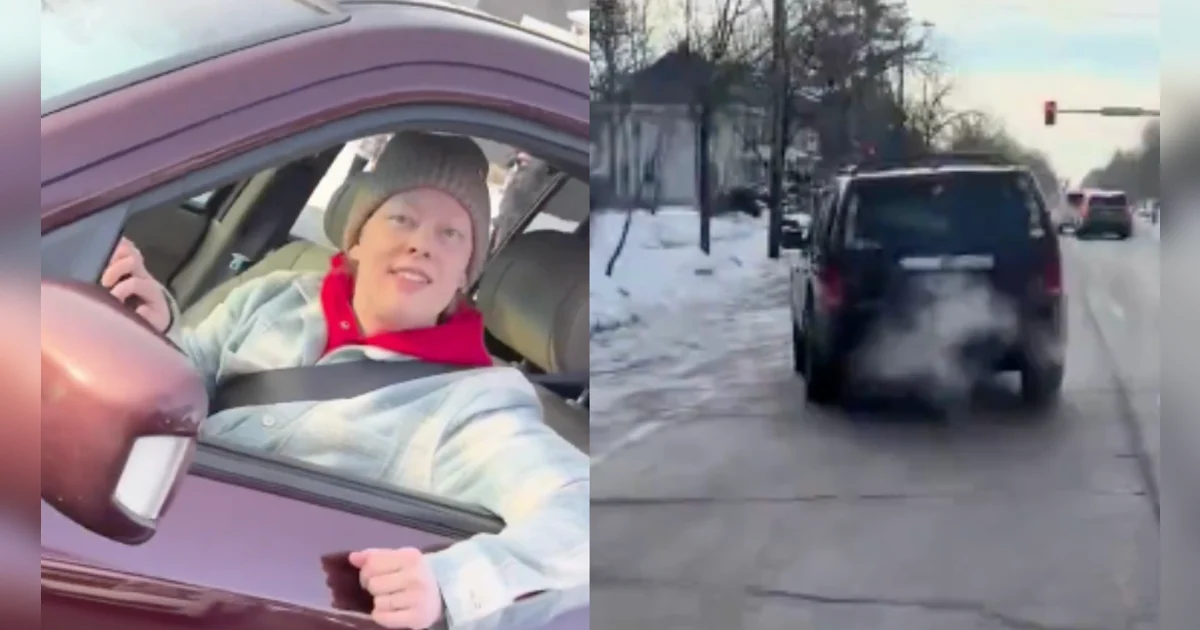
The White House has escalated tensions in a politically charged investigation by publicly sharing cellphone footage from a federal immigration officer involved in the fatal shooting of Minnesota resident Renee Good. The 47-second video, captured from the perspective of ICE agent Jonathan Ross, shows the moments leading to the Wednesday incident that has triggered nationwide protests and a jurisdictional battle between state and federal authorities.
The footage begins with Ross approaching Good’s partially traffic-blocking Honda SUV in a Minneapolis residential neighborhood. The recording captures Good’s calm demeanor as she tells the officer, ‘That’s fine, dude, I’m not mad at you’ moments before the shooting occurs. As the vehicle moves forward, Ross shouts ‘Whoa!’ before firing three shots while jumping backward from the front of the car.
This video release has deepened the divide between Democratic local leaders and Trump administration officials. Vice President JD Vance defended the shooting as self-defense, claiming Good weaponized her vehicle, while Minneapolis Mayor Jacob Frey dismissed this narrative as ‘garbage’ based on available evidence. The incident has sparked parallel investigations, with Minnesota authorities accusing the FBI of obstructing their probe after initially agreeing to cooperate.
The case reflects broader tensions surrounding federal immigration enforcement actions in Democratic-led cities. A similar incident occurred in Portland, Oregon, where a Border Patrol agent shot two Venezuelan nationals during a vehicle stop, described by the Department of Homeland Security as another case of a car being used as a weapon against federal agents.
Renee Good, remembered by her wife Becca as a Christian mother of three who believed in ‘finding kindness in the world,’ has become a symbol in the growing protest movement. A GoFundMe campaign for her family has surpassed $1.5 million in donations, reflecting the widespread public response to the shooting.
With thousands demonstrating in multiple cities and more protests planned, the conflict highlights deteriorating trust between local and federal law enforcement agencies and raises complex legal questions about jurisdiction when federal officers are involved in deadly incidents.