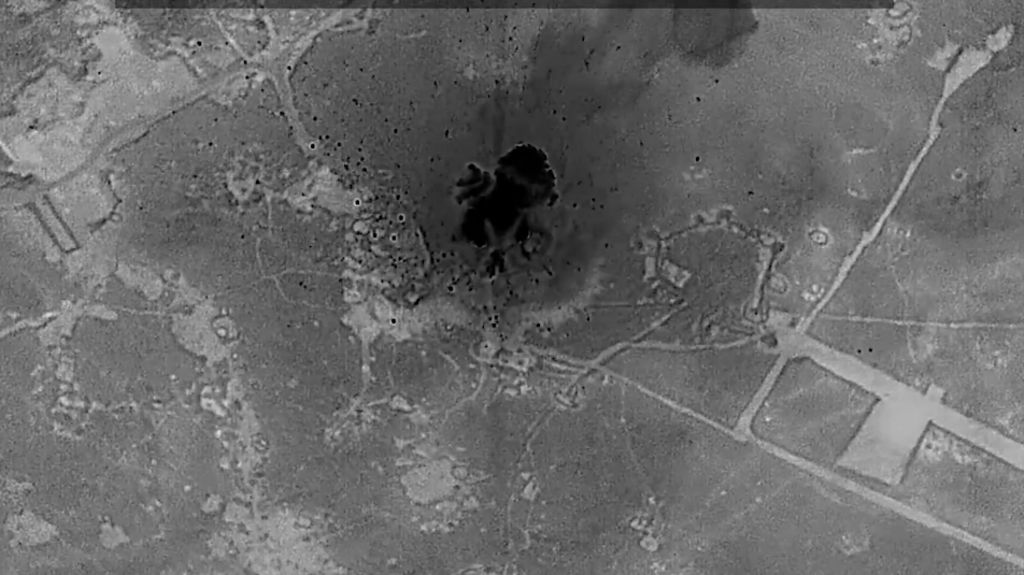
In a significant military escalation, United States Central Command (CENTCOM) has confirmed the execution of large-scale airstrikes against Islamic State (ISIS) targets across Syria. The operation, authorized directly by President Donald Trump, represents a forceful response to the December 13th ambush in Palmyra that resulted in the deaths of two American soldiers and a civilian interpreter.
Dubbed Operation Hawkeye Strike, the mission involved a formidable coalition of air assets. An official speaking to CBS News detailed that over 20 aircraft, including F-15Es, A-10s, AC-130J gunships, MQ-9 Reaper drones, and Jordanian F-16 fighter jets, delivered more than 90 precision-guided munitions against in excess of 35 confirmed ISIS targets.
The strategic objective, as stated by CENTCOM, is twofold: to degrade terrorist capabilities and to ensure the security of US and partner forces operating within the region. The command issued a stark warning on social media platform X: ‘Our message remains strong: if you harm our warfighters, we will find you and kill you anywhere in the world, no matter how hard you try to evade justice.’
This recent action is part of a sustained campaign. Prior to Saturday’s strikes, CENTCOM reported that nearly 25 ISIS operatives had been killed or captured in 11 separate missions conducted between December 20th and 29th. The operation commenced with a massive joint US-Jordanian assault on December 19th, which employed over 100 precision munitions against more than 70 targets.
Defense Secretary Pete Hegseth characterized the operation not as the start of a new war but as a ‘declaration of vengeance,’ affirming the administration’s unwavering commitment to defending American personnel. The exact location of the latest strikes and assessments regarding enemy casualties remain undisclosed at this time.
The ongoing operations occur against a complex geopolitical backdrop. Syria remains in a fragile state following the ouster of President Bashar al-Assad in late 2024, which concluded a devastating 13-year civil war. The country is now under the control of rebel leader Ahmed al-Sharaa (Abu Mohammed al-Jolani). Although significantly weakened, ISIS persists as an active insurgent threat, primarily conducting attacks against Kurdish-led forces in the nation’s northeast.