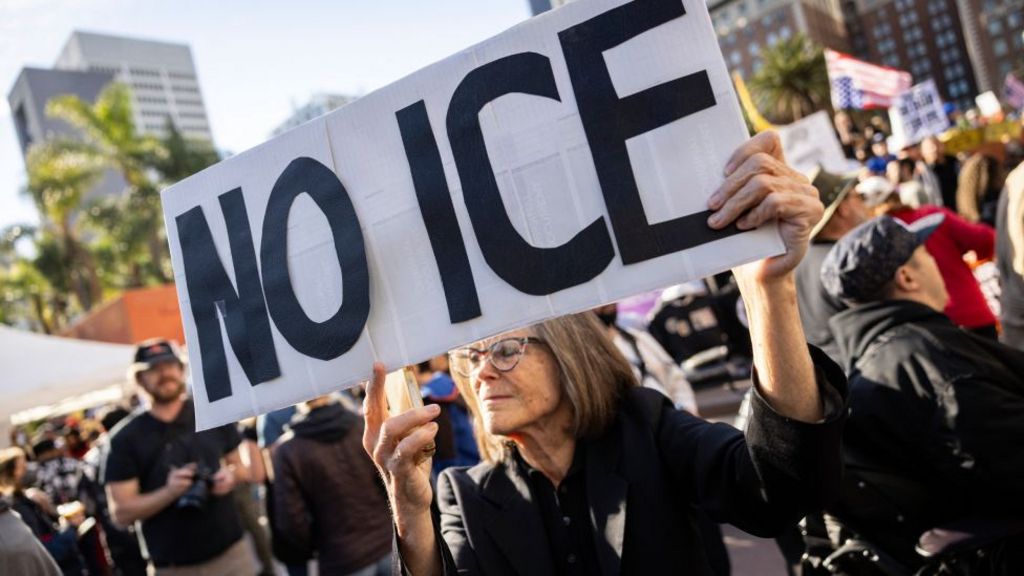
Minneapolis became the epicenter of nationwide demonstrations as thousands braved freezing temperatures Saturday to protest U.S. Immigration and Customs Enforcement (ICE) operations. The protests erupted following Wednesday’s fatal shooting of 37-year-old Renee Nicole Good by an ICE agent during what authorities describe as an enforcement operation.
The ‘ICE out of Minnesota’ rally drew tens of thousands to Powderhorn Park before marching through city streets. Despite Mayor Jacob Frey’s characterization of the protest as predominantly peaceful, tensions flared Friday night when several hundred demonstrators surrounded the Canopy Hotel, believed to house ICE personnel. Police declared an unlawful assembly after protesters forced entry through an alley and allegedly threw ice, snow, and rocks at officers.
The political fallout intensified as three Minnesota congresswomen—Ilhan Omar, Kelly Morrison, and Angie Craig—accused ICE and the Department of Homeland Security of obstructing congressional oversight after being denied access to local ICE facilities. Their attempted visit came amid revelations of a new DHS policy requiring seven days’ notice for congressional visits, implemented the day after Good’s shooting.
The incident has exposed deep ideological divisions. Homeland Security Secretary Kristi Noem characterized Good’s actions as ‘domestic terrorism,’ claiming she ‘weaponized’ her vehicle against agents. Conversely, Mayor Frey described the victim as attempting a three-point turn to escape the scene, stating local law enforcement felt ‘outnumbered’ by federal agents.
Video evidence shows ICE agents approaching Good’s stationary vehicle before shots were fired as she attempted to drive away. The agent involved was identified as Jonathan Ross, a veteran officer previously injured in the line of duty. The FBI has assumed sole investigative authority over the case, prompting Minnesota officials to launch their own inquiry after claiming they were ‘frozen out’ of the federal investigation.
Protests extended beyond Minneapolis to major cities including New York, Los Angeles, Seattle, and Austin, reflecting growing national tension over immigration enforcement methodologies.