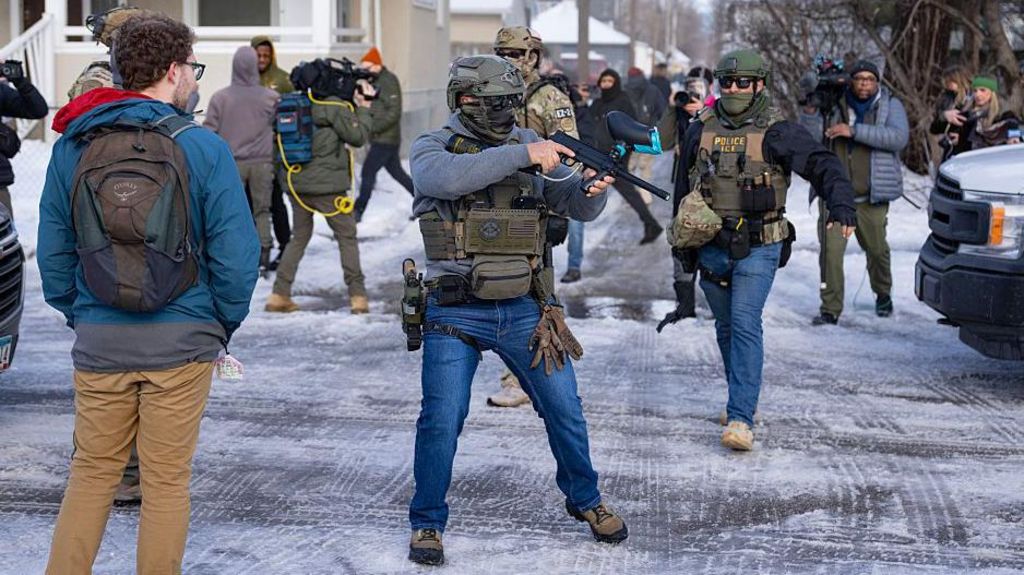
The fatal shooting of 37-year-old Renee Nicole Good by a U.S. Immigration and Customs Enforcement (ICE) officer in Minneapolis has triggered widespread protests and intensified examination of the agency’s expanding domestic operations. The incident occurred during a routine enforcement action when Good was driving a vehicle, culminating in a deadly confrontation that has become emblematic of growing tensions between federal immigration authorities and local communities.
Since President Trump’s return to the White House, ICE has dramatically increased its enforcement activities, making thousands of arrests often in public settings. This aggressive approach has positioned ICE at the forefront of the administration’s mass deportation initiative, a cornerstone of Trump’s campaign promises. The agency has seen substantial budget increases and mission expansion under the current administration, despite being originally established under the Homeland Security Act of 2002 as a response to the September 11 terrorist attacks.
ICE’s operational parameters grant agents significant authority to detain and arrest individuals suspected of unlawful presence in the United States. While technically limited in detaining U.S. citizens, documentation from ProPublica reveals more than 170 incidents during the first nine months of Trump’s presidency where federal agents held American citizens against their will, often mistakenly suspecting them of being undocumented immigrants.
The use of deadly force by ICE officers is governed by a complex framework of constitutional standards, federal law, and Department of Homeland Security policy guidelines. According to legal experts, officers may only employ lethal force when facing imminent threat of serious bodily harm or death. However, Supreme Court precedents have traditionally afforded law enforcement considerable discretion in split-second decisions.
The Trump administration has deployed an unprecedented number of federal officers to major cities including Los Angeles, Chicago, and now Minneapolis, with the Associated Press reporting up to 2,000 officers mobilizing for the latest operation. This deployment has increasingly blurred traditional jurisdictional boundaries between ICE and its sister agency, Customs and Border Protection, with Border Patrol officers now frequently operating inland alongside ICE agents.
Deportation statistics underscore the scale of current enforcement efforts. The administration reports 605,000 formal deportations between January 20 and December 10, 2025, alongside 1.9 million immigrants who allegedly ‘voluntarily self-deported’ following aggressive public awareness campaigns. Current detention figures indicate approximately 65,000 individuals in ICE custody as of late November 2025.
Community resistance to ICE operations has grown substantially, with residents increasingly documenting encounters through video recording. Several confrontations have turned violent, including incidents in Chicago where media organizations sued Border Patrol alleging excessive force against journalists and protesters. The Minneapolis shooting represents the latest in a series of violent encounters, following October incidents in Los Angeles where agents fired at drivers allegedly threatening officers with vehicles.
Public opinion reflects divided perspectives on immigration enforcement. Pew Research Center data from October 2025 indicates slight majority support for some level of deportation, but 53% of Americans believe the administration is doing ‘too much’ to deport undocumented immigrants, with only 36% fully endorsing the current approach.