Venezuelan President Nicolás Maduro and First Lady Cilia Flores made their initial court appearance at a federal courthouse in New York City on Monday, marking their first public appearance since being forcibly removed from their Caracas residence during a nighttime operation conducted by United States forces.
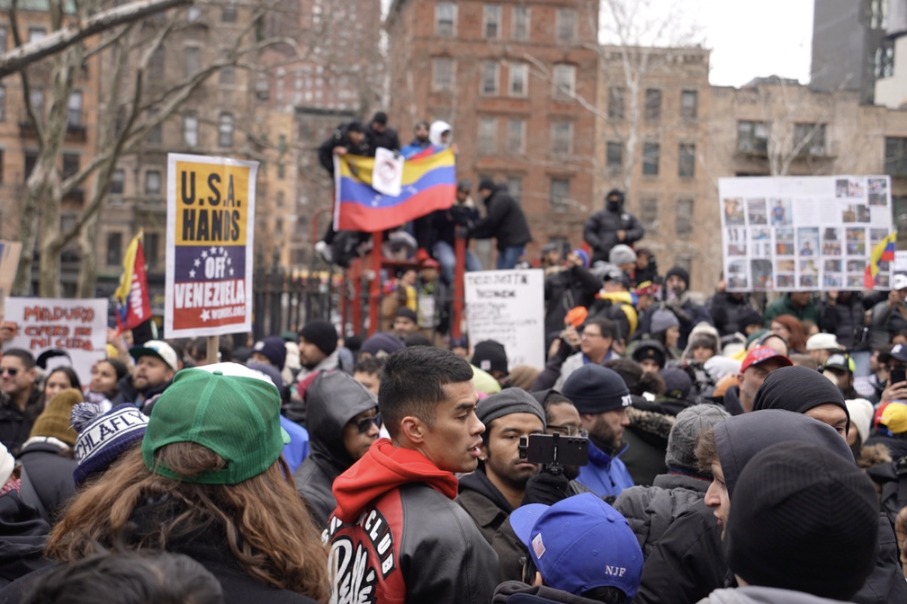
The hearing proceeded amid significant public demonstrations outside the Manhattan courthouse, where substantial crowds gathered to protest what many characterized as an unlawful international intervention. Protesters carried signs with messages including “USA hands off Venezuela,” “No US war on Venezuela,” “US hands off Venezuela oil,” and demands for Maduro’s immediate release.
This judicial proceeding follows what US President Donald Trump previously described as a “large-scale strike” operation that resulted in the capture and transportation of the Venezuelan leadership. The couple was subsequently detained at the Metropolitan Detention Center in Brooklyn pending judicial proceedings.
Among the protesters was Rae Lee, an American citizen who had stationed herself outside the courthouse since 9 am—three hours prior to Maduro’s scheduled arraignment. Lee, who recently visited Venezuela in December, provided firsthand observations contradicting US media narratives about conditions in the South American nation.
“The resilience and economic development I witnessed in Venezuela were remarkable,” Lee stated. “Despite consistent US media portrayals of oppression and deterioration, we observed significant housing projects and substantial economic growth. The US government’s primary interest clearly lies in Venezuela’s substantial oil reserves and natural resources, seeking to install a puppet regime that would prioritize American interests over Venezuelan sovereignty.”
Lee further characterized the operation as “an international crime,” emphasizing that Maduro had been democratically elected twice in processes she described as “more transparent and representative than American elections.” The ongoing case has raised significant questions about international law, sovereignty, and the appropriate limits of cross-border military operations.