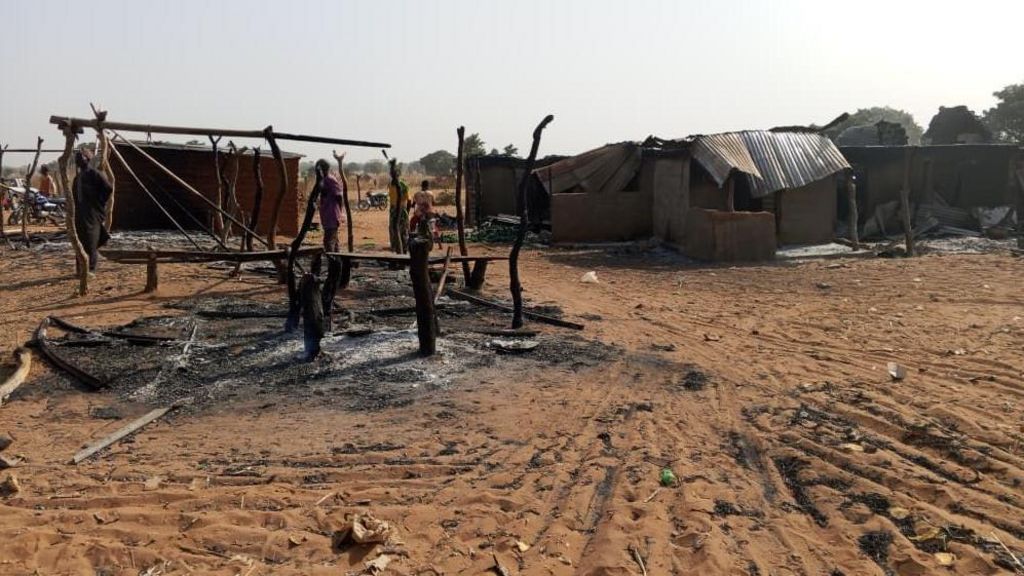
In a brutal assault that underscores Nigeria’s escalating security crisis, armed militants slaughtered at least 30 civilians during a coordinated attack on Kasuwan-Daji village in Niger State. The assailants, emerging from nearby forests on motorcycles, unleashed terror upon the rural community this past Saturday.
The attack followed a familiar pattern of violence plaguing northwestern Nigeria. Witnesses reported that gunmen systematically rounded up villagers before executing them, with some victims slaughtered while others were shot at close range. The assailants simultaneously torched the community’s central marketplace and looted commercial establishments before abducting an unspecified number of residents.
Local authorities confirmed the grim details through multiple channels. Abdullahi Rofia of the Niger State Emergency Management Agency described a population paralyzed by fear, noting that survivors remain too terrified to speak publicly about the atrocities. ‘They are hiding, they are too afraid to talk to anybody,’ Rofia explained. ‘They are scared that if you talk, they will turn and do the same to you.’
This violence occurs against a backdrop of worsening security conditions throughout Nigeria’s central and western regions. Despite government classifications designating these criminal groups as terrorist organizations, attacks have intensified in both frequency and brutality. Niger State police spokesperson Wasiu Abiodun confirmed that emergency response teams have been deployed to assist the wounded while security forces pursue hostage recovery operations.
The timing of this massacre proves particularly alarming to security analysts, occurring merely one day after state authorities announced phased school reopenings following November’s mass abduction of 250 students and staff from St. Mary’s Catholic School in Papiri. While those hostages were eventually rescued before Christmas, the latest violence suggests security measures remain critically inadequate.
Villagers expressed desperation through interviews with BBC Hausa service, with one witness lamenting the absence of security forces during the attack. ‘We are dying like chickens, and does the government care about us?’ the survivor questioned. ‘The government hears and sees what is happening, but it is not doing anything about it.’
This incident represents the latest in a devastating pattern of village attacks throughout Niger State, driving internal displacement as lifelong residents flee territories their families have inhabited for generations. The federal prohibition on ransom payments appears routinely ignored in practice, creating a complex crisis that continues to evolve without clear resolution.