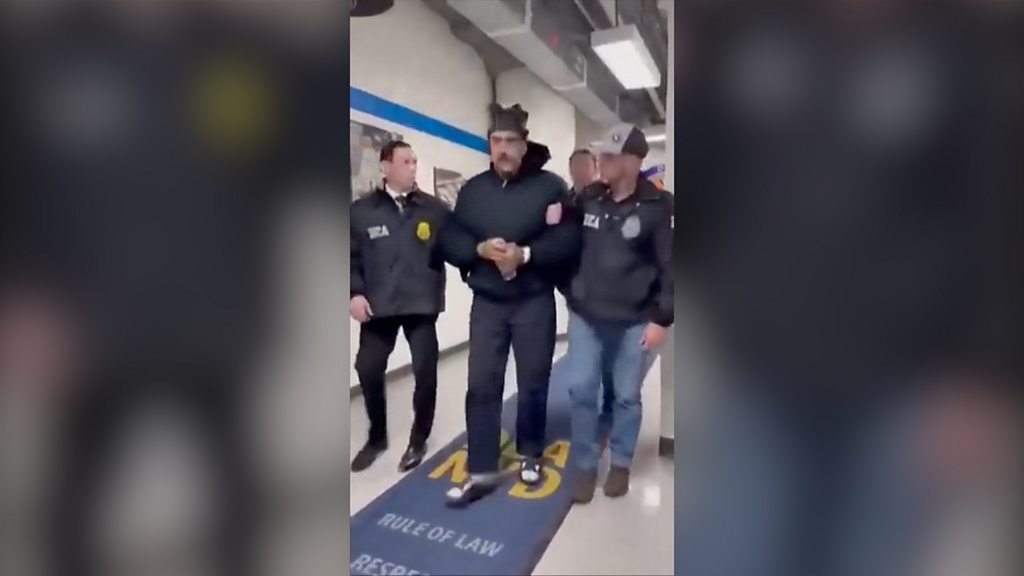
In an unprecedented geopolitical development, Venezuelan President Nicolás Maduro has been transferred to United States custody following his capture during American military operations this past Saturday. Video documentation has emerged showing Maduro’s arrival on US soil and his subsequent processing by law enforcement authorities in New York.
The operation represents a significant escalation in the ongoing tensions between Washington and Caracas, which have persisted through multiple administrations. Maduro, who has led Venezuela since 2013, faces numerous charges in US courts, including allegations of drug trafficking, corruption, and human rights violations.
This extraordinary event marks one of the most dramatic moments in US-Latin American relations in recent decades, with potential ramifications for regional diplomacy, international law, and the principle of sovereign immunity. The transfer of a sitting head of state to another country’s jurisdiction without extradition proceedings establishes a remarkable precedent in international relations.
Analysts are closely monitoring reactions from Venezuela’s political allies, including Russia, China, and Cuba, who have consistently supported Maduro’s government. The situation continues to develop as legal experts examine the complex jurisdictional questions raised by this unprecedented action.