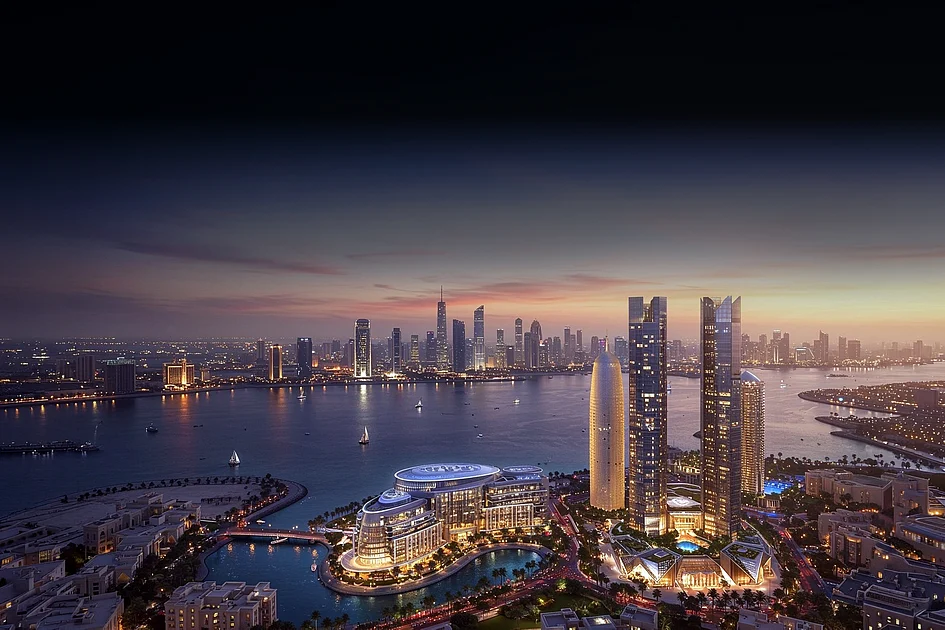
The global luxury real estate landscape is undergoing a fundamental transformation, with Dubai emerging as the epicenter of a new era in branded residences. According to Knight Frank’s comprehensive Residence Report 2025-2026, which analyzed over 1,000 active and pipeline developments across 83 countries, the market has evolved from niche offering to core developer strategy.
The Middle East commands approximately 27% of the global branded residence pipeline, with Dubai achieving unprecedented performance metrics. The city recorded $8.2 billion in home sales exceeding $10 million through June 2025—the highest global total—demonstrating its dominance in the ultra-prime property sector.
A paradigm shift is occurring in what constitutes luxury value. Flashy amenities are declining in appeal while wellness integration, longevity-focused design, and everyday livability are becoming the primary value drivers. Developments now prioritize health-led living through dedicated clinics, community wellness programs, and sensory-focused architecture, as exemplified by London’s Surrenne and Dubai’s SHA Emirates.
Three significant trends are reshaping the market:
1. **Brand Diversification**: Beyond traditional hotel partnerships, fashion labels, restaurants, and wellness brands are entering real estate. Dubai showcases this through Bulgari Residences at Jumeirah Bay with distinctive Italian design and upcoming Bentley-branded towers targeting ultra-prime buyers.
2. **Standalone Privacy**: Properties are increasingly designed as self-contained experiences rather than hotel attachments. Developments like Raffles Residences on The Palm offer exclusive amenities without shared spaces with hotel guests, providing complete privacy while maintaining five-star service standards.
3. **Master-Planned Communities**: Beyond individual towers, developers are creating comprehensive branded ecosystems. Dubai Hills Estate and Sobha Hartland combine multiple residences with shared amenities including golf courses, private clubs, and cultural hubs, creating immersive lifestyle-oriented neighborhoods.
Andrew Cummings, Head of Residential Agency at Savills Middle East, notes that Dubai’s regulatory frameworks, tax incentives, and infrastructure have enabled it to translate global trends into exceptional market performance. Unlike mature hubs facing regulatory pressures and higher borrowing costs, the UAE provides a supportive environment for wealthy buyers seeking both lifestyle enhancement and long-term investment.
Will McKintosh, Regional Partner at Knight Frank MENA, confirms the UAE’s position as an outperformer in the global luxury residential landscape. Market dynamics are driven by substantial inward migration fueled by safety, world-class amenities, and overall quality of life rather than speculative investment.
As the market progresses into 2026, industry experts anticipate continued high demand with increased investor selectivity. Prime and super-prime assets offering genuine differentiation through brand credibility, design excellence, and authentic community creation will likely outperform projects focused merely on immediate appeal.