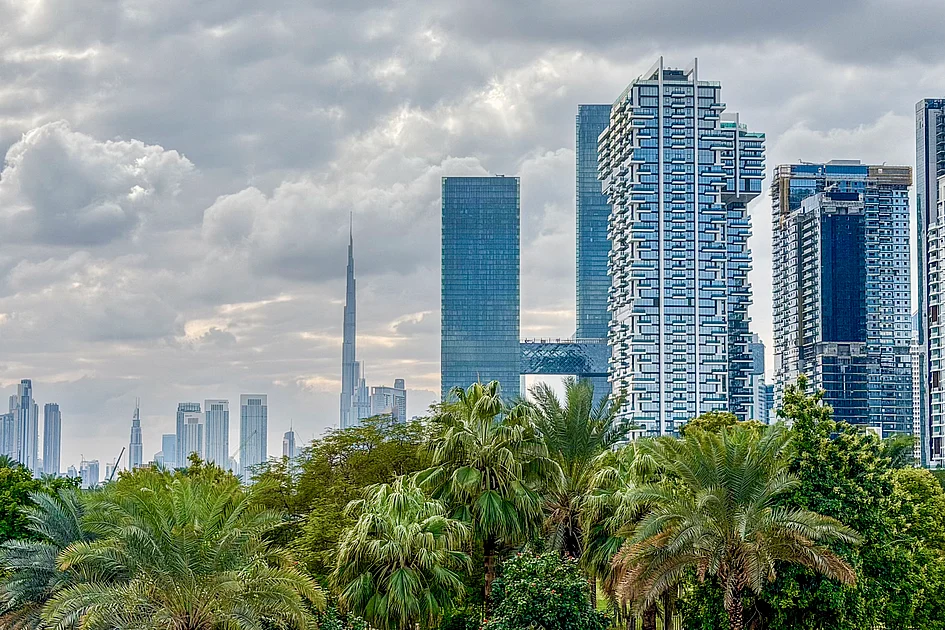
Dubai’s property sector is poised for a transformative phase in 2026, characterized by land scarcity in prime districts, strategic market rebalancing, and the emergence of Abu Dhabi as a competitive investment alternative. Industry executives anticipate this period will favor data-driven decision-making over speculative investments, with resilience concentrated in high-quality assets and purpose-built commercial developments.
According to Abdullah Alajaji, CEO of Driven Properties, Abu Dhabi is rapidly evolving into a formidable real estate market, with expanded liquidity through tokenization and alternative ownership structures enhancing market depth. The upcoming cycle is expected to address the current imbalance between residential oversupply and office space shortages, with government-backed entities likely to introduce purpose-built office districts to meet sustained demand.
Firas Al Msaddi, CEO of fäm Properties, emphasizes the critical importance of analytical metrics for market timing. “Days on market and absorption rates provide real-time indicators of supply-demand dynamics,” he notes, cautioning against treating Dubai as a monolithic market. Instead, he recommends granular analysis across location, price category, usage type, and buyer profile to identify genuine opportunities.
Market projections indicate high handover volumes through 2026-2027 will create rental price softening in areas with substantial new supply, while sales prices maintain stability with upward trends in select segments. The most resilient locations will be those with limited future development potential, particularly Dubai’s emerging “golden square” encompassing Jumeirah Bay, Jumeirah Water Canal corridor, Downtown, Business Bay, DIFC, City Walk, and La Mer.
With raw land diminishing in established core areas, Alajaji anticipates increased public-private collaboration, with government entities leveraging their extensive land banks for projects like Dubai Design District, Palm Jebel Ali, and subsequent phases of Dubai Islands. This approach distributes risk while maintaining long-term market equilibrium.
Msaddi identifies Jebel Ali and Jumeirah Village Circle (JVC) as areas with significant upcoming supply, though he distinguishes between Jebel Ali’s massive scale mitigating oversupply risks and JVC’s 25,000+ planned handovers requiring heightened selectivity regarding building quality, layout, and pricing differentiation.
Regulatory developments are expected to enhance transparency and operational discipline, particularly regarding advertising controls and broker operations, with anticipation building for the January 2026 implementation of NOC requirements for rental advertising permits.
Despite potential global economic headwinds, Dubai’s lower mortgage dependency and appeal to internationally mobile wealth position it for relative resilience. “Wealth doesn’t disappear—it compresses,” Msaddi observes, noting that demand for secure, functional investment havens persists during uncertainty.
The 2026 investment strategy prioritizes selection over speculation, focusing on scarcity-driven prime locations, institutional-quality assets, and community-oriented developments that maintain desirability beyond initial launch enthusiasm. Investors are advised to monitor days-on-market metrics, off-plan absorption rates, and exercise particular caution in high-volume pipeline areas while establishing exit strategies during acquisition rather than after.
Market performance will ultimately be determined by disciplined pricing based on comparable properties within the same building or community, rather than optimistic projections. As Alajaji summarizes, resilience will concentrate in locations “with minimal remaining land supply,” creating an environment where only appropriately priced quality assets will thrive.