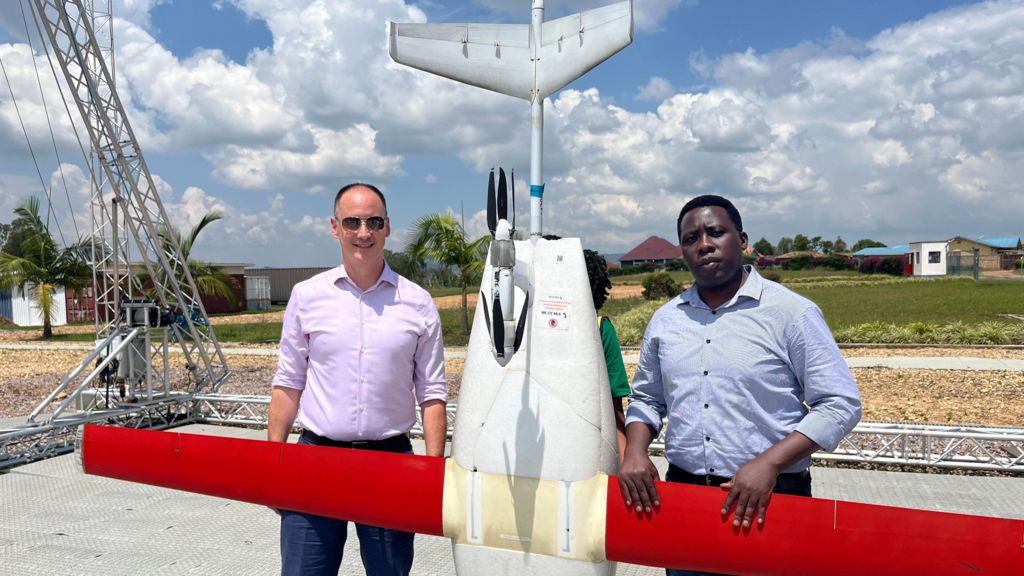
A groundbreaking initiative led by the University of Birmingham is transforming vaccine distribution in remote regions of Africa through innovative drone technology. Research indicates that approximately 25% of vaccine doses in certain African areas are currently discarded due to temperature control failures during storage and transportation.
Professor Chris Green, who divides his time between the NHS and the University of Birmingham, alongside PhD researcher Gilbert Rokundo from the Rwanda Biomedical Centre, has pioneered a solution using Rwanda’s established drone delivery infrastructure. The country already utilizes commercial drone services for transporting blood and medical supplies to inaccessible regions.
The research demonstrates how fixed-wing drone aircraft, launched via catapult systems, can deliver temperature-sensitive vaccines from centralized storage facilities to remote clinics within 45 minutes anywhere in Rwanda. Medical staff simply text or email requests as patients arrive for immunization, with vaccines arriving via parachute-dropped shoebox-sized packages before registration processes are complete.
This approach has dramatically reduced on-site vaccine storage needs by up to 90% in participating clinics while maintaining uninterrupted immunization services. The drones complete their missions by returning to stations where they are captured by wires between two towers, refueled, and prepared for subsequent flights.
Although still in early data analysis stages, the project shows significant promise for expanding vaccine accessibility while reducing waste across developing regions with challenging terrain and unreliable infrastructure.