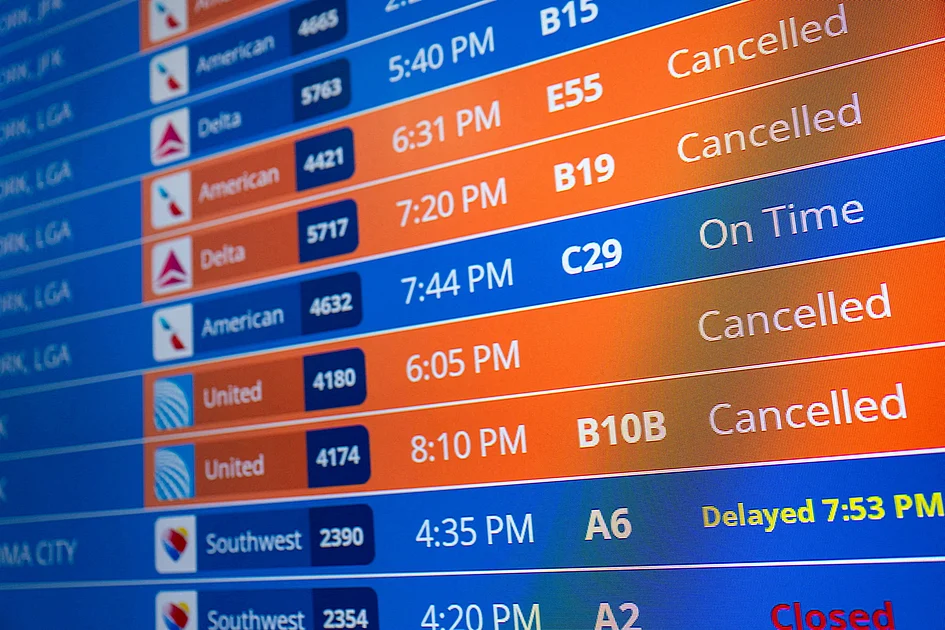
A severe winter storm system identified as Ezra has unleashed travel chaos across the United States, creating one of the most disruptive holiday travel scenarios in recent years. The powerful weather phenomenon, now escalating into a meteorological ‘bomb cyclone,’ has caused massive flight disruptions affecting tens of thousands of passengers during the critical year-end travel period.
According to real-time data from FlightAware, the storm has resulted in the cancellation of over 3,600 flights since Friday, with more than 30,000 additional flights experiencing significant delays. On Monday alone, aviation authorities reported 751 cancellations and nearly 6,000 delays as of 3:25 PM Eastern Time.
The situation has been particularly challenging for airlines operating at near-capacity during this peak travel season, leaving minimal flexibility for rebooking affected passengers. Major carriers including Delta Air Lines, United Airlines, American Airlines, and JetBlue Airways have implemented emergency measures, waiving change fees for travelers impacted by the severe weather conditions.
Meteorologists from AccuWeather have warned that the intensifying bomb cyclone—characterized by rapidly dropping atmospheric pressure generating hurricane-force winds—is creating blizzard conditions across a massive corridor from Wisconsin to Maine. The storm has brought dangerous combinations of ice accumulation, flooding rainfall, and powerful winds, with temperatures experiencing wild fluctuations. Philadelphia, for instance, saw temperatures near 60 degrees Fahrenheit on Monday before an expected overnight plunge into the 20s.
The transportation crisis extends beyond aviation, with road travel becoming increasingly perilous due to poor visibility, icy surfaces, and blowing snow. Multiple multi-vehicle pileups have been reported across affected regions, prompting authorities to advise against non-essential travel. The Federal Emergency Management Agency has issued warnings about dangerous driving conditions throughout the Upper Midwest and Great Lakes regions.
Aviation operations have been severely hampered by the extreme weather. The Federal Aviation Administration implemented ground stops at multiple airports, including Washington’s Dulles International Airport due to high winds, and Detroit Metropolitan Wayne County Airport where Delta Air Lines flights were specifically affected. Additional delays were reported at major hubs including Boston and Newark airports serving the New York metropolitan area, primarily due to low visibility and windy conditions.
The financial impact on airlines has been immediate, with Delta’s shares falling nearly 3% in afternoon trading, while United Airlines, American Airlines, and Alaska Air Group each experienced approximately 2% declines. The tightly interconnected nature of airline operations means that canceled flights leave aircraft and crews out of position, creating complex challenges for restoring normal schedules even after weather conditions improve.