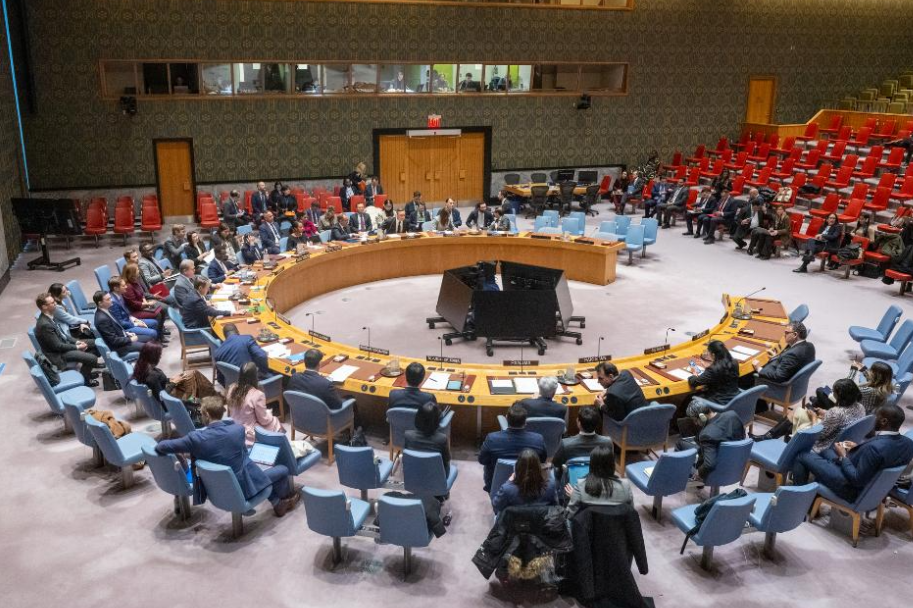
The United Nations Security Council convened an emergency session on Tuesday addressing the rapidly deteriorating situation in Venezuela, with the overwhelming majority of member states urging restraint and adherence to international law. The meeting, requested by Venezuela itself, revealed deep international divisions over U.S. military actions in the region.
Venezuelan Permanent Representative Samuel Moncada Acosta delivered a forceful condemnation of American foreign policy, characterizing recent U.S. actions as an extension of historical hemispheric dominance. “The ambition is continental,” Acosta asserted, referencing what he described as a modern enactment of the Monroe Doctrine exacerbated by what he termed the “Trump Corollary” in U.S. national security strategy.
The diplomatic confrontation intensified as Russian UN Ambassador Vassily Nebenzia denounced American seizure of Venezuelan oil tankers and the imposition of a naval blockade as violations of multiple international legal frameworks. “The illegal U.S. blockade of Venezuela’s coastline is a genuine act of aggression,” Nebenzia stated, warning that Washington’s actions signal a broader pattern of intervention against sovereign nations pursuing independent policies.
China’s Deputy Permanent Representative Sun Lei joined the criticism, calling for immediate cessation of U.S. campaigns against Venezuela. Sun emphasized that Venezuela’s rights as a sovereign state to develop international cooperation and defend its legitimate interests should receive international respect and support. “China opposes all acts of unilateralism and bullying,” Sun declared, positioning China as a defender of multilateral principles and national sovereignty.
The emergency session concluded with widespread calls for de-escalation, though no formal resolution was immediately proposed. The meeting highlighted growing international concern that the Venezuela situation could trigger broader regional instability and challenge fundamental principles of international law.