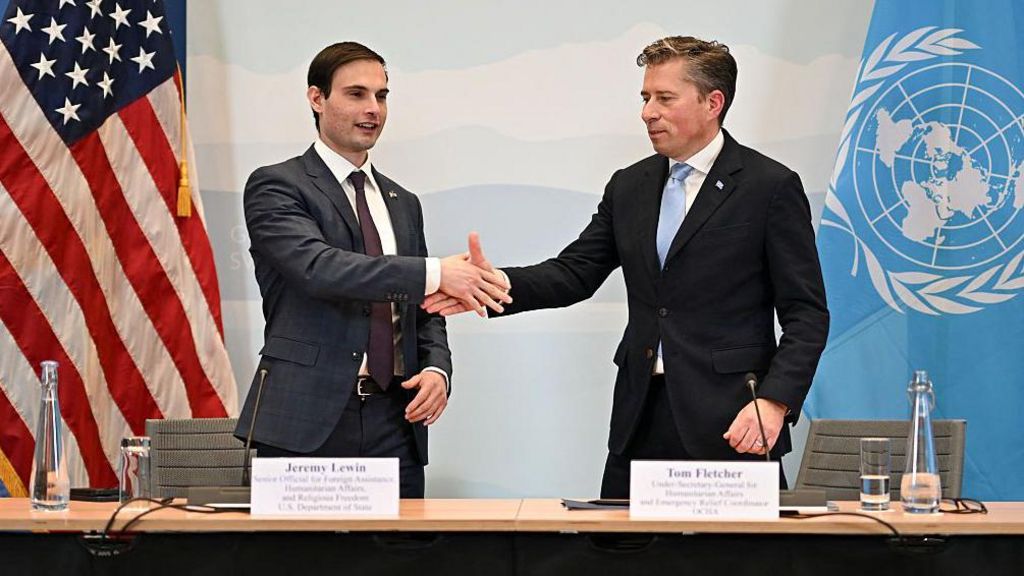
In a significant diplomatic move that underscores shifting foreign policy priorities, the United States has committed $2 billion to United Nations humanitarian programs while delivering a stark ultimatum to the international body: reform or face financial consequences. The announcement, made jointly in Geneva by Trump administration official Jeremy Lewin and UN emergency relief chief Tom Fletcher, represents both a lifeline and a challenge to global humanitarian operations.
The funding comes amid substantial reductions in American contributions to international aid, with previous annual commitments reaching approximately $17 billion as recently as 2022. While Fletcher acknowledged the new injection of funds would preserve “millions of lives,” the assistance carries unprecedented restrictions that break with traditional humanitarian principles.
Washington has explicitly excluded Afghanistan and Yemen from receiving any portion of the aid package. Lewin justified this decision by asserting that evidence indicates UN funds in Afghanistan have been diverted to Taliban operations, stating emphatically that “President Trump will never tolerate a penny of taxpayers’ money going to terrorist groups.”
Additionally, the funding prohibits expenditures related to climate change initiatives, which Lewin characterized as neither “life-saving” nor aligned with “US interests.” The assistance will be concentrated in just 17 predetermined nations, including Haiti, Syria, and Sudan, bypassing many regions experiencing severe humanitarian crises.
Lewin, architect of the recent USAID restructuring that eliminated thousands of positions, delivered a blunt message to UN leadership: “adapt or die.” He emphasized that American generosity would not extend to “organizations that just want to return to the old system,” demanding focused, efficient implementation without program duplication.
While UN officials publicly endorse principles of efficiency and accountability, concerns emerge regarding the politicization of humanitarian aid. The exclusion of specific countries and entire categories of crisis response challenges the fundamental humanitarian principles of neutrality and impartiality—cornerstones of international aid distribution.
The funding reduction has already produced tangible consequences: closure of maternal health clinics in Afghanistan, reduced food rations for displaced populations in Sudan, and anticipated increases in global child mortality rates reversing years of progress.
Despite these concerns, the UN faces the pragmatic reality that $2 billion represents critical support during an ongoing funding crisis, even from a skeptical donor administration. The arrangement illustrates the complex negotiation between humanitarian ideals and political realities in contemporary international relations.