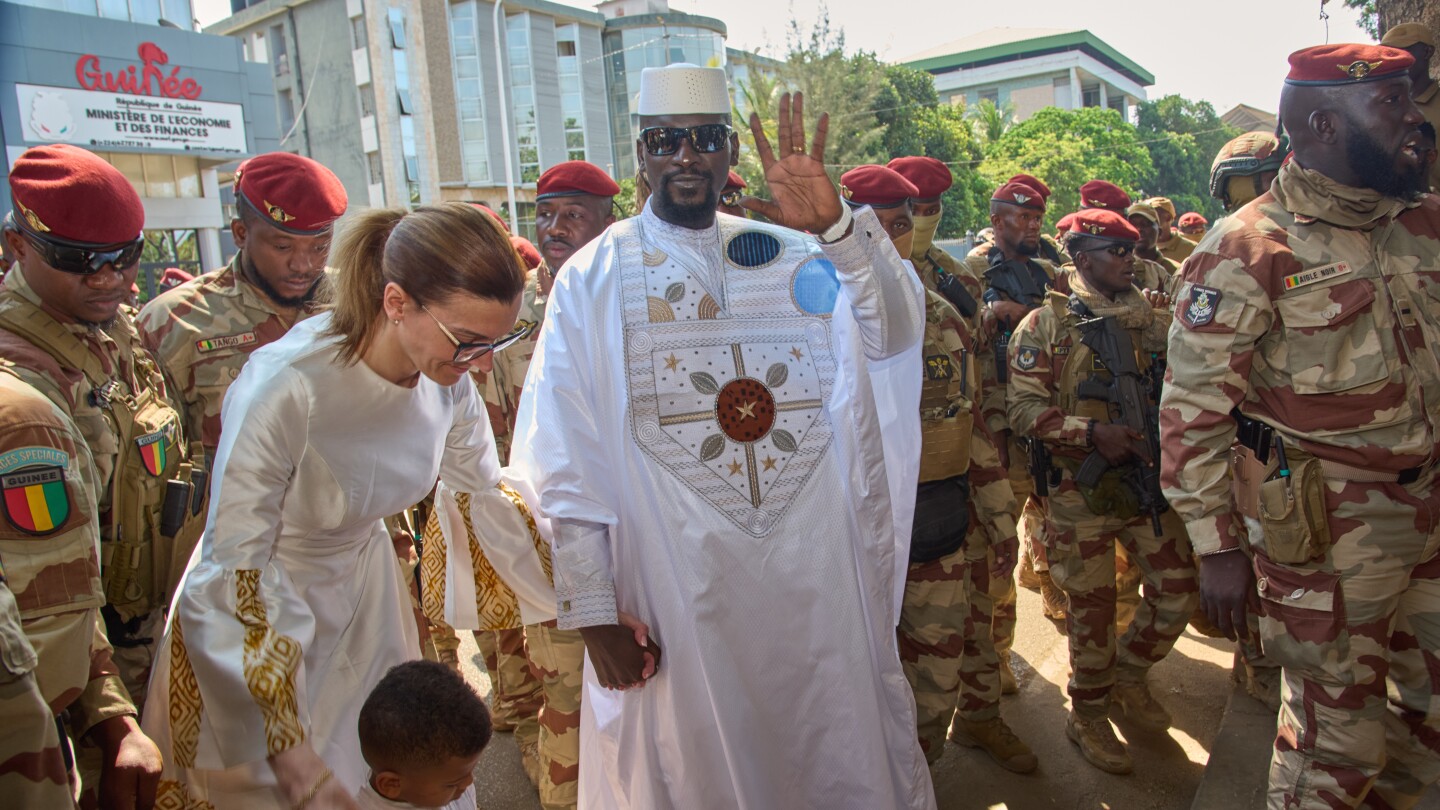
CONAKRY, Guinea — Guinea concluded its first presidential election since the 2021 military coup on Sunday, with junta leader General Mamadi Doumbouya emerging as the clear frontrunner against a fractured opposition field. The landmark vote marks the culmination of a four-year transitional period initiated after Doumbouya deposed President Alpha Condé.
The electoral process unfolded under a revised constitutional framework that eliminated prohibitions on military leaders seeking office and extended presidential terms from five to seven years. This constitutional overhaul, approved via referendum last September despite opposition calls for boycott, fundamentally reshaped Guinea’s political landscape.
Political analysts attribute Doumbouya’s advantageous position to systematic suppression of dissent that has characterized his transitional government. Critics document widespread silencing of civil society voices, abductions of government opponents, and press censorship. The political environment further contracted last year when authorities dissolved over 50 political parties in what they termed a ‘cleansing of the political chessboard.’
Voter participation appeared subdued nationwide, partially influenced by boycott appeals from excluded opposition groups. Despite Guinea’s status as the world’s leading bauxite exporter, the nation confronts severe economic challenges with over half of its 15 million citizens experiencing record poverty and food insecurity according to World Food Program data.
The electoral field featured nine candidates, with Doumbouya’s most credible challenger being relatively obscure former education minister Yero Baldé. Prominent opposition figures either faced exclusion on technical grounds or have been driven into exile. Security measures intensified significantly with nearly 12,000 security personnel deployed nationwide following reports of armed groups with ‘subversive intentions’ being neutralized in Conakry.
While Doumbouya’s campaign emphasized infrastructure development and reforms initiated during his tenure—particularly the massive Chinese-backed Simandou iron ore project—opposition candidates focused on governance reforms and anti-corruption measures. The election represents the latest political development in West Africa’s expanding pattern of military interventions, where at least ten nations have experienced coups in recent years.
Initial results are anticipated within 48 hours, with a runoff election required if no candidate secures an outright majority.