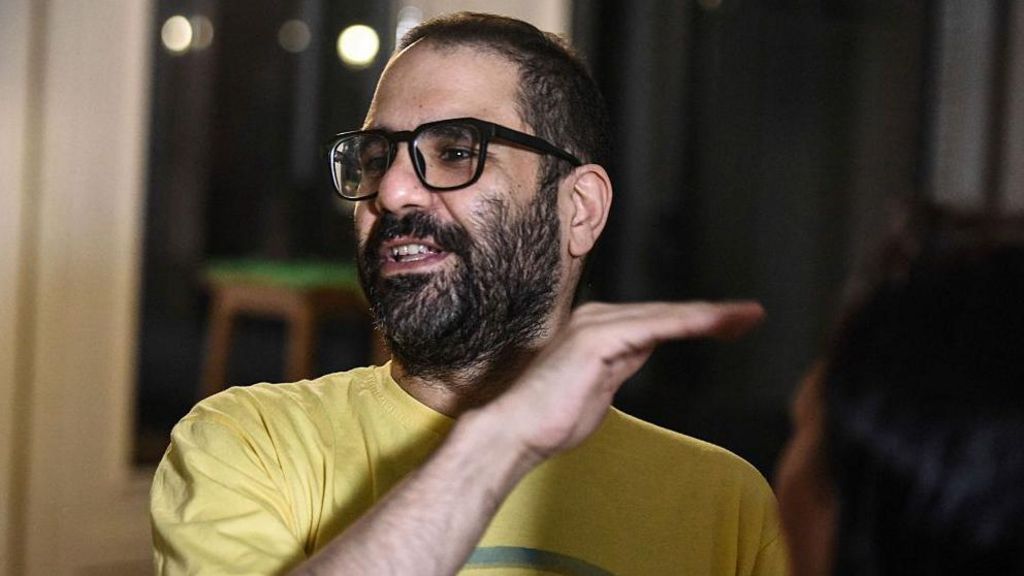
A significant political controversy has engulfed Westminster following the arrival of Egyptian-British democracy activist Alaa Abdel Fattah in the United Kingdom, with mounting calls for the revocation of his citizenship over resurfaced inflammatory social media posts.
The situation escalated when historical tweets attributed to Abdel Fattah surfaced containing violent rhetoric targeting Zionists, police officers, and white people. In one 2012 post, he allegedly stated: “I consider killing any colonialists and specially Zionists heroic, we need to kill more of them.” Another tweet reportedly read: “I am a racist, I don’t like white people.”
Conservative leader Kemi Badenoch and Reform UK’s Nigel Farage have jointly demanded that Home Secretary Shabana Mahmood review whether Abdel Fattah’s British citizenship can be legally revoked. Farage characterized the activist’s views as “racist and anti-British” in a formal letter to the Home Office, while Badenoch condemned the remarks as “disgusting and abhorrent.”
Prime Minister Sir Keir Starmer faces criticism for publicly expressing delight at Abdel Fattah’s arrival last Friday, with opponents claiming he demonstrated an “extraordinary error of judgement” without conducting proper due diligence on the activist’s controversial online history.
Abdel Fattah, who was granted citizenship in December 2021 through his London-born mother during Priti Patel’s tenure as home secretary, has issued an unequivocal apology. “I do understand how shocking and hurtful they are, and for that I unequivocally apologize,” he stated, while maintaining that some posts had been “completely twisted out of their meaning” and taken out of context.
The 44-year-old software developer and writer recently concluded a 12-year imprisonment in Egypt after being convicted in 2021 of “spreading fake news” for sharing a Facebook post about torture allegations—a trial widely condemned by human rights organizations as grossly unfair.
Legal experts have questioned the feasibility of citizenship revocation, noting Britain’s obligations under international law to avoid rendering individuals stateless. Dame Emily Thornberry, chair of the Commons foreign affairs committee, emphasized that “he is a British citizen” entitled to constitutional protections.
The Board of Deputies of British Jews expressed “profound concern” over the case, with senior vice-president Adrian Cohen warning that Abdel Fattah’s rhetoric poses threats to British Jews and the wider public, while criticizing what he described as “a broken system with an astonishing lack of due diligence by the authorities.”