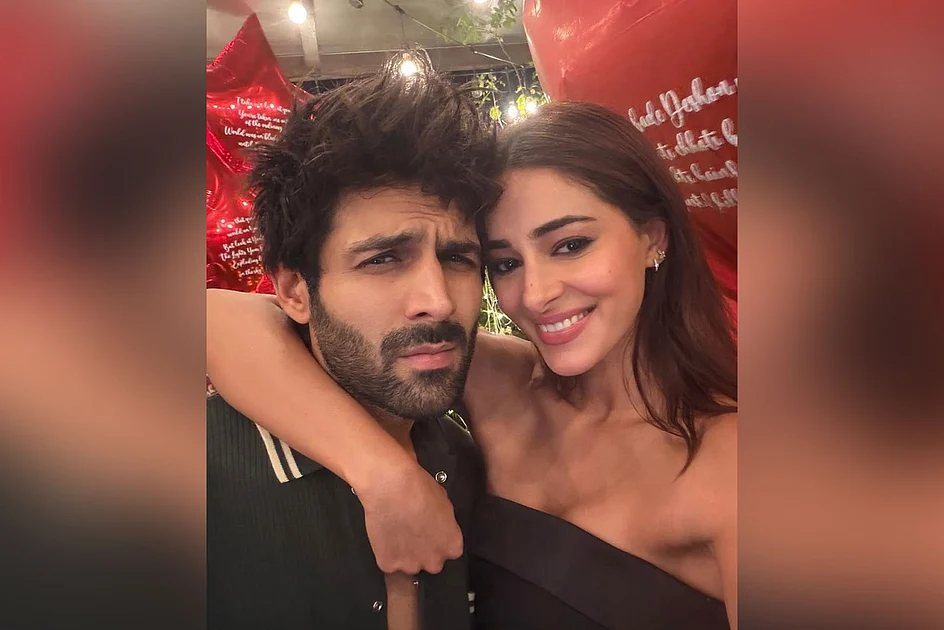
Dharma Productions’ latest romantic comedy ‘Tu Meri Main Tera Main Tera Tu Meri’ attempts to bridge generational gaps but ultimately collapses under the weight of its own contradictions. Starring Kartik Aaryan and Ananya Panday, the film presents itself as a modern reinterpretation of classic Bollywood romance tropes while desperately clinging to 90s nostalgia.
The narrative follows Rehan (Aaryan), a charismatic American wedding planner, and Rumi (Panday), an aspiring novelist constrained by familial obligations in Agra. Their meet-cute occurs during a poorly explained Yacht Week celebration in Croatia, where scenic cinematography by Anil Mehta provides temporary visual relief from the film’s structural deficiencies.
Director Sameer Vidwans and writer Karan Shrikant Sharma assemble familiar elements: the protective father (Jackie Shroff), the progressive mother (Neena Gupta), and the eternal conflict between romantic love and filial duty. The film explicitly references its aspirations through Rumi’s dialogue: ‘I’m searching for ’90s love in 2025’s hook-up culture.’
Despite these ambitions, the execution falters dramatically. The editing appears disjointed, with irrelevant subplots involving an astrologer’s wife and Rumi’s sister’s ex-boyfriend adding clutter rather than depth. Performance styles clash noticeably—Aaryan relies on his established goofy charm while Panday struggles to embody her thinly-written character beyond sartorial elegance.
The musical score combines original compositions by Vishal Shekhar with a nostalgia-bait medley of 90s hits including ‘Saat Samundar’ and ‘Mehendi Laga Ke Rakhna.’ These references feel less like homage and more like desperate attempts to evoke emotions the screenplay fails to generate organically.
Ultimately, the film’s fundamental contradiction lies in its aesthetic: attempting to appear contemporary through Gen-Z slang and pop culture references while mechanically recycling plot devices from classics like ‘Dilwale Dulhania Le Jayenge,’ ‘Piku,’ and ‘2 States.’ The production design’s similarity to recent Dharma films further reinforces the sense of creative stagnation.
For audiences seeking genuine romantic storytelling, this glittery but hollow patchwork offers little beyond temporary visual pleasure and nostalgic recognition—a disappointing outcome from an otherwise prestigious production house.