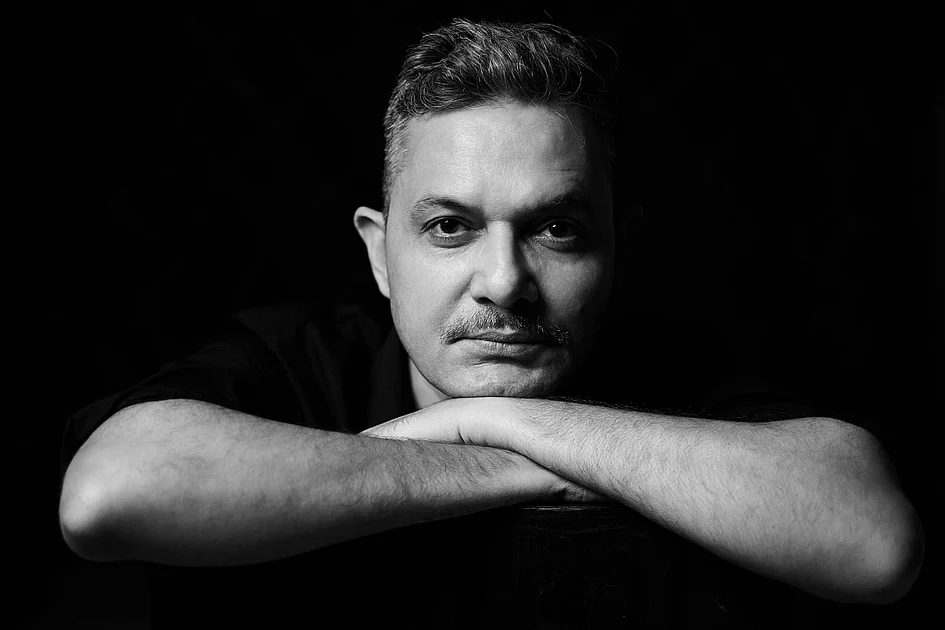
Indian lyricist and storyteller Neelesh Misra, renowned for his poetic contributions to Bollywood hits like ‘Jadu Hai Nasha Hai’ from Jism and ‘Kyun na Hum Tum’ from Barfi, is redefining success through conscious refusal and mindful creation. During a recent family vacation in Dubai, Misra revealed that his most potent skill is the ‘art of saying no,’ a principle he has upheld even at personal financial cost.
Misra vehemently declines projects that conflict with his sensibilities, particularly what he describes as ‘sleazy lyrics.’ He illustrates this by explaining that if a provided hook line is indecent, the accompanying verses would inevitably need to be worse, a compromise he refuses to make. This commitment to integrity extends beyond film; it is the cornerstone of his broader movement, ‘Slow,’ which advocates for a simpler, more deliberate lifestyle counter to modern frenzy.
The power of language remains central to Misra’s philosophy. He asserts that teaching children the transformational power of words from an early age can be life-changing, enabling them to express ideas with profound impact. This belief is culminating in plans to launch the Neelesh Misra School of Creativity. He contends that even in the era of artificial intelligence, human command over language is paramount, as we ultimately instruct the AI engines.
However, Misra warns of a societal crisis fueled by digital distraction and manufactured outrage. He observes that people now actively seek reasons to be angry, asking ‘Aaj kis se upset hona hai?’ (Who should I get upset with today?). This online angst, he argues, provides a strange, fake gratification, replacing genuine real-world engagement. He identifies ‘biased story-telling’ as a prominent and twisted voice in today’s discourse, where the loudest narratives are not necessarily the right ones.
The antidote, according to Misra, is empathy—’the secret sauce’ that allows one to ‘become the other’ and see life from another’s perspective, even amidst disagreement. He laments that decency is no longer incentivized; in content creation, as on the road, the bully often dominates while good content is sidelined for not fighting back. He criticizes the industry’s obsession with quantitative metrics—a film’s billion-rupee collection or a book’s million copies sold—as a poor substitute for qualitative value, which often gets overshadowed by propaganda and vested interests.
Through ‘Slow,’ Misra offers an alternative. He hosts celebrities in his village for long-form interviews not just for content, but to expose them to a mindful way of life. He expresses deep concern over the ‘great negativity’ shaping our world through the content we consume, noting that short-form videos have wasted the inventive potential of millions of bright minds at the expense of richer relationships and real conversation.
Ultimately, Misra believes in the healing power of stories, a fact reinforced by parents who tell him his narratives reduce their children’s anxiety. His final measure for his lyrical work is deeply personal: would it inspire a person in a small town to sing it in the shower, in their most private, unmasked moment? For Misra, true success is making someone feel that the song is their own emotion, simply written by someone else.