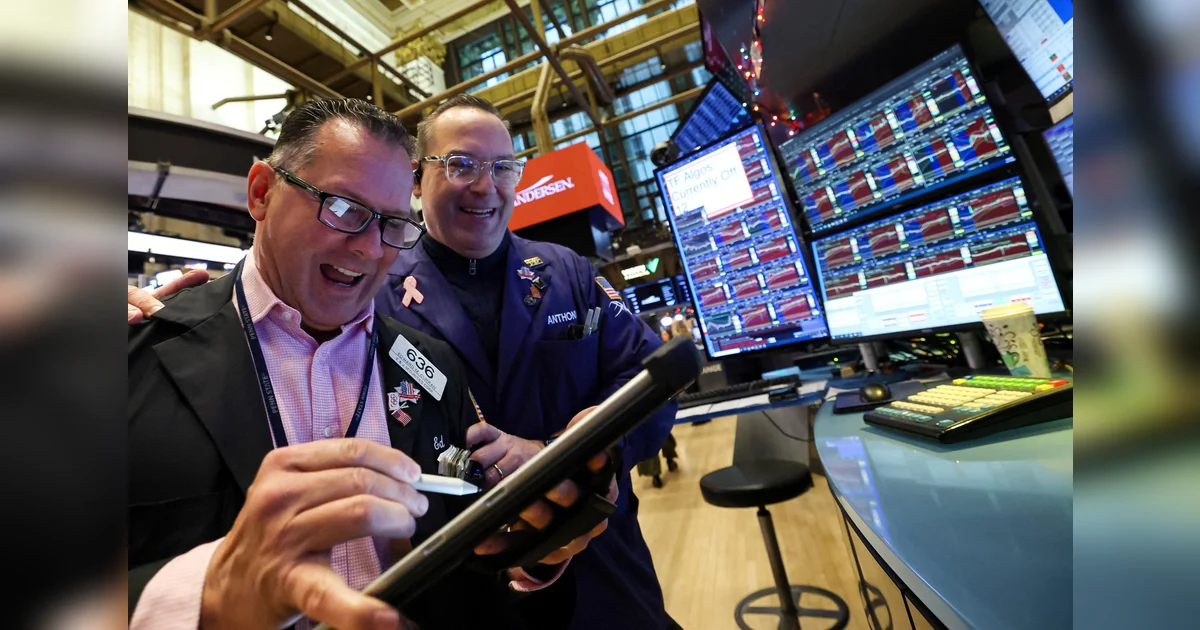
As financial markets enter the Christmas-New Year transition period, they undergo a fundamental transformation characterized by diminished trading activity and amplified volatility. This seasonal shift creates a uniquely fragile trading environment where traditional market behaviors become less reliable.
The convergence of multiple factors drives this annual phenomenon: institutional investors conducting year-end portfolio rebalancing, foreign exchange exposure adjustments, and significantly reduced participation across major markets. The resulting liquidity vacuum leads to wider bid-ask spreads and creates conditions where even routine data releases or isolated transactions can trigger disproportionate price movements.
Historical patterns have often referenced the so-called “Santa Claus Rally”—a tendency for U.S. equity indices to strengthen during late December. However, this seasonal expectation remains contingent on broader macroeconomic conditions, valuation pressures, and evolving policy expectations. The 2025 market trajectory toward 2026 appears particularly dependent on Federal Reserve policy signals, global growth prospects, and investor interpretation of emerging economic indicators.
Market analysts emphasize that technical discipline becomes paramount during this period. Traders should prioritize higher-timeframe analysis to filter out liquidity-driven distortions, await confirmed breakouts supported by volume, and maintain strict risk management protocols. Position sizing, stop-loss orders, and disciplined profit targets take on increased importance when market depth diminishes.
Across major asset classes, distinct dynamics emerge. U.S. equities maintain a broadly bullish bias but face potential consolidation risks around stretched valuations and policy uncertainty. Precious metals continue consolidating below their 2025 peaks, awaiting catalyst events to establish new support levels. The U.S. dollar approaches critical multi-year support zones that will likely determine its longer-term trajectory, while crude oil remains sensitive to geopolitical developments and winter demand patterns.
The consensus among trading professionals suggests that the most effective strategy involves treating holiday market movements as noise rather than meaningful trend developments. Preserving capital and maintaining strategic clarity outweighs pursuing short-term gains in unpredictable conditions. As central banks approach a potentially pivotal policy year, the cautious approach adopted during these final weeks of 2025 may well position investors more advantageously for the opportunities and challenges of 2026.