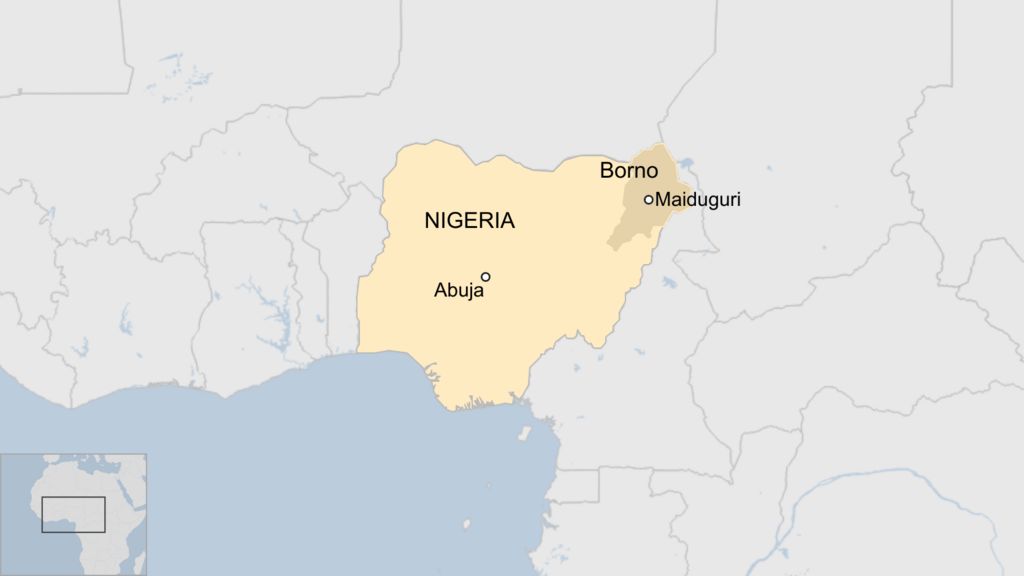
A suspected suicide bomber has targeted a mosque in Nigeria’s northeastern Borno State, resulting in multiple feared casualties during evening prayers. The attack occurred in Maiduguri, the regional capital long plagued by Islamist militant violence.
Eyewitness accounts describe a powerful explosion rocking the worship area as congregants gathered for Maghrib prayers. While unverified social media footage depicts chaotic scenes with dust-filled air and distressed crowds in nearby market areas, official casualty figures remain unconfirmed. Initial reports suggest at least seven fatalities, though authorities have not released formal statements verifying the death toll or injury count.
The attack bears hallmarks of previous assaults by extremist groups operating in the region, though no organization has claimed responsibility. Borno State has served as the epicenter of a prolonged insurgency led by Boko Haram and its splinter faction, Islamic State West Africa Province (ISWAP). These militant organizations have repeatedly targeted religious sites and crowded public areas using suicide bombers and improvised explosive devices (IEDs) as primary tactics.
Since 2009, Boko Haram’s campaign to establish an Islamic caliphate has transformed northeastern Nigeria into a persistent conflict zone. Despite sustained military counteroperations and government security measures, the region continues to experience sporadic attacks against civilian populations. This latest bombing underscores the enduring security challenges facing Nigerian forces in containing extremist violence that has displaced millions and claimed thousands of lives over the past decade.