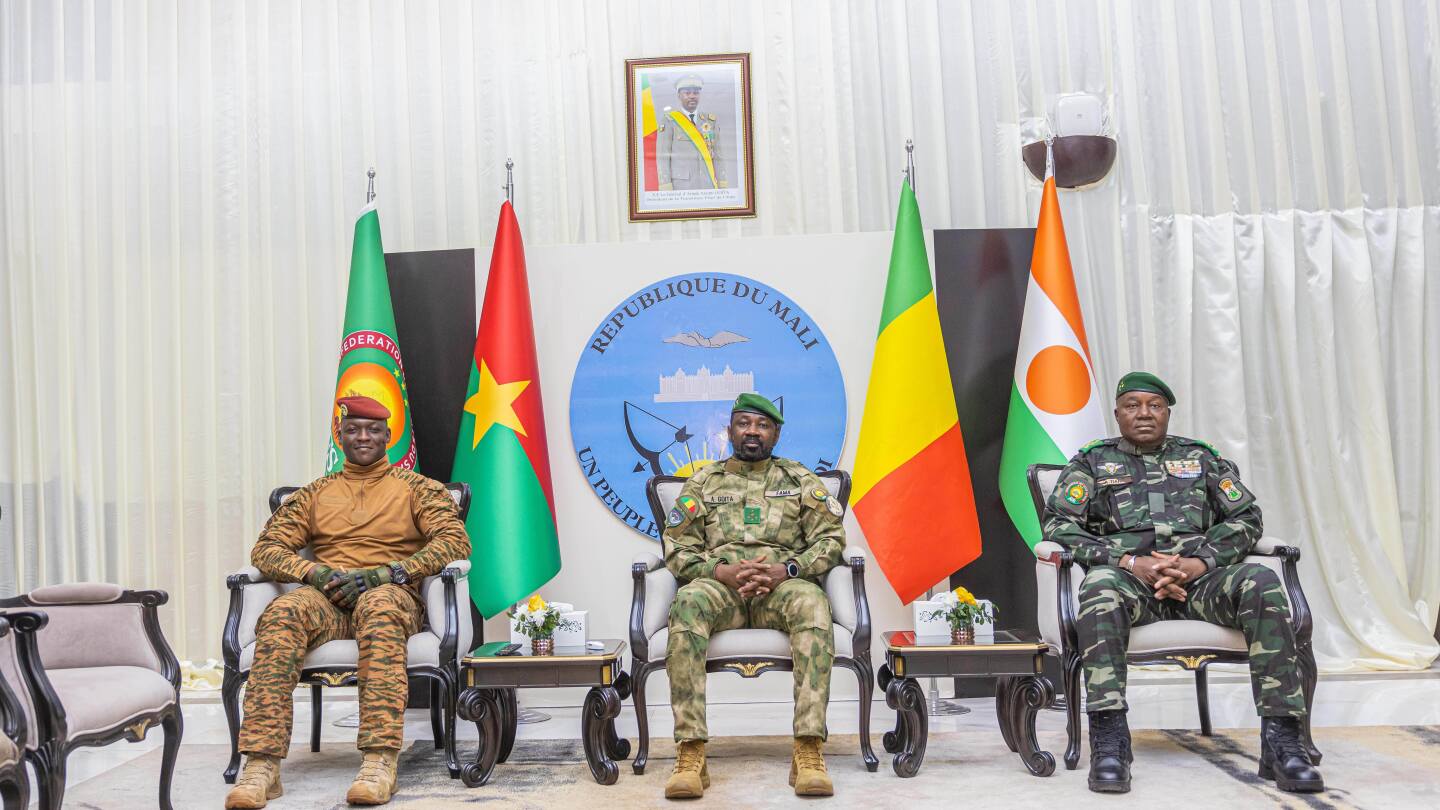
BAMAKO, Mali — The newly formed Alliance of Sahel States has initiated a significant military escalation against extremist groups operating throughout the region. Captain Ibrahim Traoré, Burkina Faso’s leader and newly appointed head of the tri-nation alliance, announced that the recently deployed joint battalion will soon expand into large-scale security operations across Mali, Burkina Faso, and Niger.
The three military-led governments, which collectively withdrew from West Africa’s regional bloc earlier this year, convened a summit on Tuesday to strengthen security and economic cooperation. This gathering followed the operational launch of a 5,000-personnel joint military battalion designed specifically to combat armed extremist organizations.
These Sahel nations represent the epicenter of global extremist violence, with armed factions affiliated with both al-Qaida and the Islamic State creating the deadliest concentration of terrorism activity worldwide. All three countries have experienced military coups in recent years and contend with severely strained security forces.
Niger’s junta leader, Abdourahamane Tchiani, emphasized the alliance’s commitment to sovereignty, stating that member states have terminated all foreign military occupations—a clear reference to the expulsion of French and American forces. “No country or interest group will decide for our countries anymore,” Tchiani declared during the summit.
Despite this assertion of independence, the alliance has simultaneously cultivated strengthened security partnerships with Russia, signaling a strategic pivot in international allegiances.
Regional security analysts note the considerable challenges facing the alliance. Rida Lyammouri of Morocco’s Policy Center for the New South observed that the Sahel’s multifaceted security crisis remains “very difficult to defeat” regardless of which external partners engage with the alliance.
Ulf Laessing, head of the Sahel program at the Konrad Adenauer Foundation, highlighted the alliance’s growing internal cohesion despite international sanctions and fractured diplomatic relations. The bloc “enjoys popularity among citizens of the three countries” and appears committed to expanding cooperation beyond immediate military objectives.