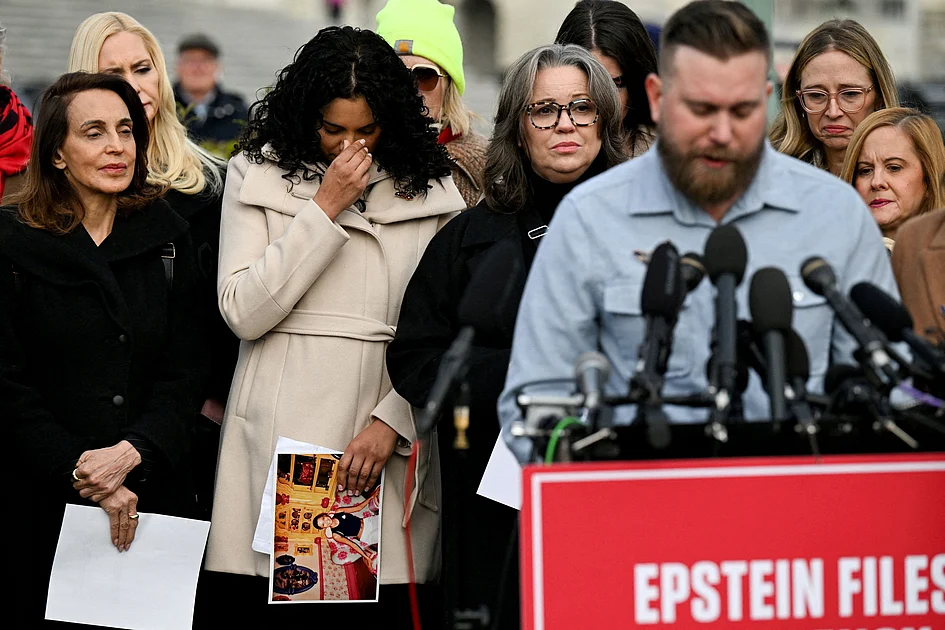
A heavily redacted release of court documents pertaining to the Jeffrey Epstein case has ignited fierce criticism from victims and lawmakers, raising serious questions about transparency within the Trump administration. The long-anticipated cache, made public by the U.S. Justice Department, contained numerous blacked-out pages and censored photographs, fueling allegations of an orchestrated high-level cover-up.
The document trove included previously unseen images featuring prominent figures within Epstein’s social orbit, such as former President Bill Clinton, musician Mick Jagger, and the late Michael Jackson. Notably absent, however, were photographs of former President Donald Trump that had been referenced in prior investigations. This selective redaction prompted immediate condemnation from Democratic leaders, with Senator Chuck Schumer characterizing the situation as potentially “one of the biggest cover ups in American history.”
Epstein survivors expressed profound disappointment with the release. Victim Jess Michaels reported being unable to locate her original statements and communications with FBI tip lines within the documents. “Is this the best that the government can do? Even an act of Congress isn’t getting us justice,” Michaels stated in a CNN interview.
The materials did reveal some new details about Epstein’s connections to powerful figures, including dozens of censored images depicting nude or scantily clad individuals. Among these were photographs of disgraced Prince Andrew lying across the legs of five women, and images showing Bill Clinton lounging in a hot tub alongside Ghislaine Maxwell, Epstein’s accomplice who is currently serving a 20-year sentence.
The release complied with recent legislation mandating public disclosure of case files, though officials cited legal constraints and victim privacy concerns as justification for extensive redactions. Deputy Attorney General Todd Blanche denied any intentional withholding of information to protect Trump, despite the former president’s months-long effort to block the documents’ disclosure. Trump ultimately signed the legislation compelling publication under mounting pressure from Congress, including members of his own party.