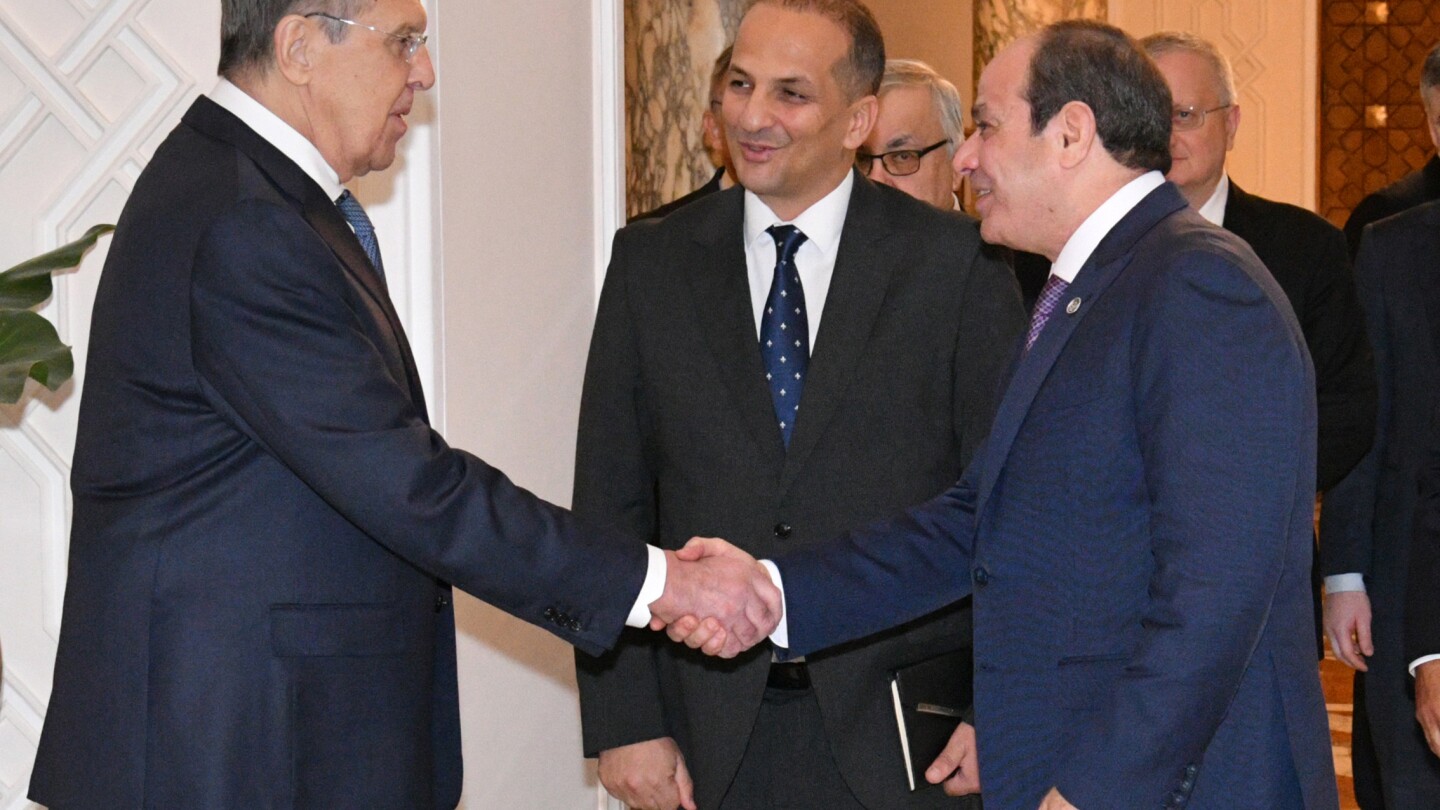
CAIRO — Egyptian President Abdel-Fattah el-Sissi has intensified diplomatic efforts to reform the United Nations Security Council, advocating for substantial African representation during the Russia-Africa partnership conference in Cairo. The high-level gathering witnessed participation from Russian Foreign Minister Sergey Lavrov, ministerial delegates from over 50 African nations, and representatives from multiple regional organizations.
El-Sissi, through a statement delivered by his foreign minister, emphasized the necessity of establishing ‘a more pluralistic global governance framework’ that acknowledges Africa’s growing demographic, economic, and political influence. The president argued that the continent’s substantial global weight warrants meaningful participation in international decision-making processes.
The African Union’s longstanding proposal, initially presented in 2005, seeks two permanent Security Council seats endowed with veto authority for African nations. Proponents maintain that such structural adjustments would enhance peace and stability across a continent historically plagued by prolonged conflicts.
Concurrently, el-Sissi highlighted parallel demands for restructuring international financial institutions to achieve equitable African representation, addressing systemic imbalances in global economic governance.
The current Security Council architecture, unchanged since its 1945 establishment, comprises five permanent members with veto power (the United States, Russia, China, Britain, and France) alongside ten non-permanent members elected to two-year terms without veto capabilities.
The Cairo conference aims to formulate a comprehensive strategy for strengthening Russia-Africa cooperation ahead of next year’s heads-of-state summit. Lavrov reiterated Moscow’s commitment to being ‘a reliable partner for African states in strengthening their national sovereignty,’ emphasizing Russia’s dedication to expanding practical cooperation across multiple domains.
This diplomatic forum has gained significance following the 2023 St. Petersburg summit, where President Vladimir Putin sought to counter Western isolation through enhanced African partnerships. Russia has concurrently expanded its military presence across sub-Saharan Africa, deploying advanced weaponry and replacing the Wagner Group with Kremlin-controlled security units in various conflict zones.