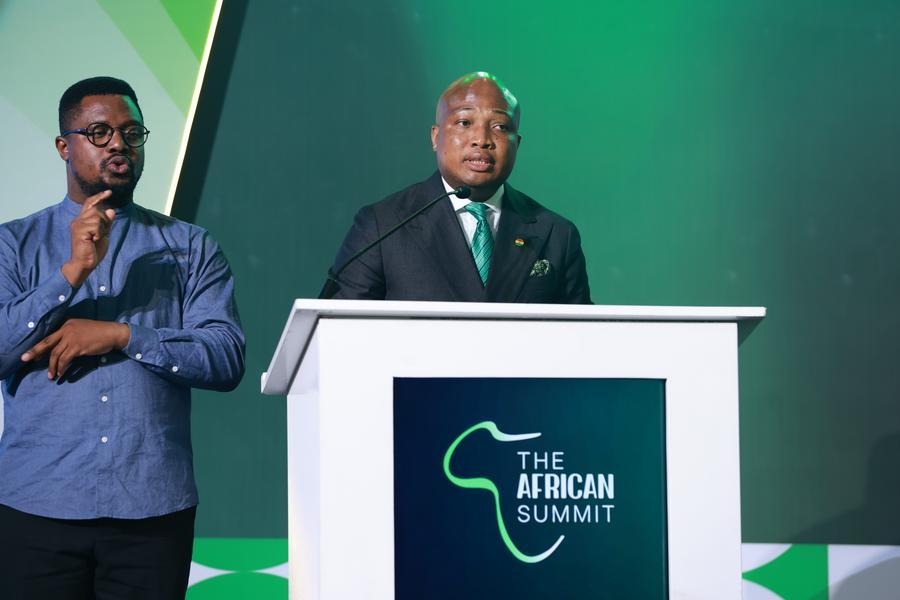
ACCRA – African leaders convened for the inaugural African Summit in Ghana’s capital, delivering a powerful message to the international community: the continent demands fundamental reforms to global governance structures. Under the theme “Building a New United Africa,” policymakers and stakeholders gathered to forge consensus on achieving greater integration and strategic autonomy.
Ghana’s Foreign Minister Samuel Okudzeto Ablakwa set the tone, highlighting Africa’s persistent challenges including fragmentation, weak intra-African trade, infrastructure deficits, and excessive dependence on external markets. “The global environment within which Africa must pursue its integration agenda is undergoing rapid, profound transformation,” Ablakwa declared, emphasizing Africa’s transition from passive observer to active shaper of global outcomes.
The summit occurred against a backdrop of significant geopolitical shifts. November’s G20 Leaders’ Summit in Johannesburg marked a watershed moment as African nations, alongside Global South partners, successfully steered discussions toward development priorities despite U.S. opposition. The adopted declaration emphasized multilateral cooperation and stronger support for developing economies.
Economic indicators signal Africa’s rising prominence. The IMF projects sub-Saharan Africa’s growth will outpace the global average at 4.1% in 2025. The African Continental Free Trade Area (AfCFTA) demonstrates substantial progress, with 47 nations ratifying the agreement. World Bank estimates suggest AfCFTA could generate $450 billion in additional economic output by 2035, lifting 30 million from extreme poverty.
However, security challenges persist. Recent coups in Guinea-Bissau and Benin, alongside renewed conflict in the Democratic Republic of Congo displacing over 500,000 people, prompted West African authorities to declare a regional “state of emergency.” Analysts attribute these instability patterns to colonial legacies, terrorism, and economic development gaps.
External economic pressures compound these challenges. U.S. tariff impositions on Lesotho and South Africa triggered dramatic export declines, with Lesotho losing nearly 80% of textile orders and South African auto exports plummeting 85% in May.
Infrastructure development emerges as a cornerstone solution. The recent launch of Guinea’s Simandou iron ore project to China and the Tanzania-Zambia Railway rehabilitation project demonstrate advancing regional connectivity. Zambia’s Transport Minister Frank Tayali noted these initiatives support visions of becoming “a land-linked nation and logistics hub.
As the 70th anniversary of China-Africa diplomatic relations approaches in 2026, partnerships continue deepening. Kenyan economist James Shikwati observed that “China’s pragmatic, inclusive approach offers viable alternatives to traditional Western models” for Global South development.
African Union Director of Information Leslie Richer captured the summit’s consensus: “The Global South must not speak in fragments. Our strength lies in unity” to shape global decision-making.