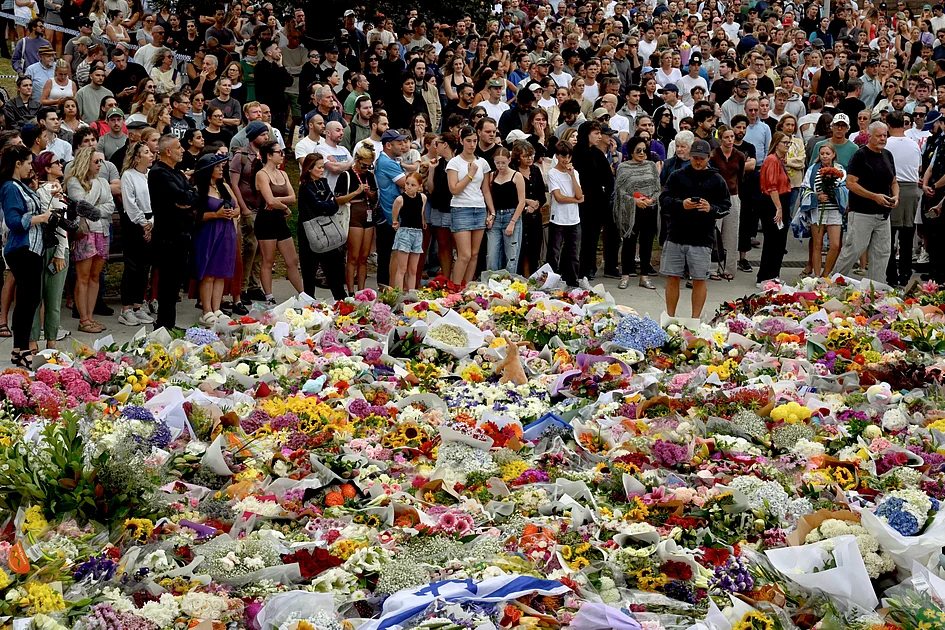
Australian authorities have initiated a comprehensive nationwide investigation into Sunday’s devastating mass shooting at Bondi Beach during a Hanukkah celebration, which resulted in 15 fatalities and 42 injuries. The attack, Australia’s deadliest firearm incident in nearly thirty years, has prompted serious national security evaluations and international investigative cooperation.
The alleged perpetrators have been identified as Sajid Akram, 50, and his 24-year-old son Naveed Akram, according to widespread media reports. Sajid Akram, originally from Hyderabad, India, emigrated to Australia in November 1998. He held Indian citizenship at the time of the attack, while his Australia-born children possessed Australian citizenship. Indian police officials confirmed that Akram maintained minimal contact with his Hyderabad relatives over the past 27 years, visiting only six times primarily for property matters.
A significant development emerged from Philippine immigration authorities, revealing both suspects spent nearly all of November in the Philippines before returning to Australia just weeks before the attack. Australian police are actively investigating the purpose and activities of their Philippines visit.
Prime Minister Anthony Albanese confirmed the attack appears motivated by extremist ideology targeting Jewish communities, with authorities discovering improvised explosive devices and homemade flags associated with Daesh in a vehicle registered to Naveed Akram. Intelligence agencies had previously noted Naveed in 2019 but didn’t classify him as an imminent threat, raising critical questions about preventive measures.
The tactical execution involved both attackers firing long-barrelled weapons across the beach and adjacent park for approximately ten minutes before police intervention. Sajid Akram was fatally shot at the scene, while Naveed remains comatose under police guard. Investigation revealed Sajid legally held a firearms license since 2015 and owned six registered weapons.
The international dimension continues to develop with Indian authorities emphasizing the radicalization appears unrelated to India or Telangana region, while Pakistani media reported unrelated individuals facing mistaken identity issues due to name similarities.