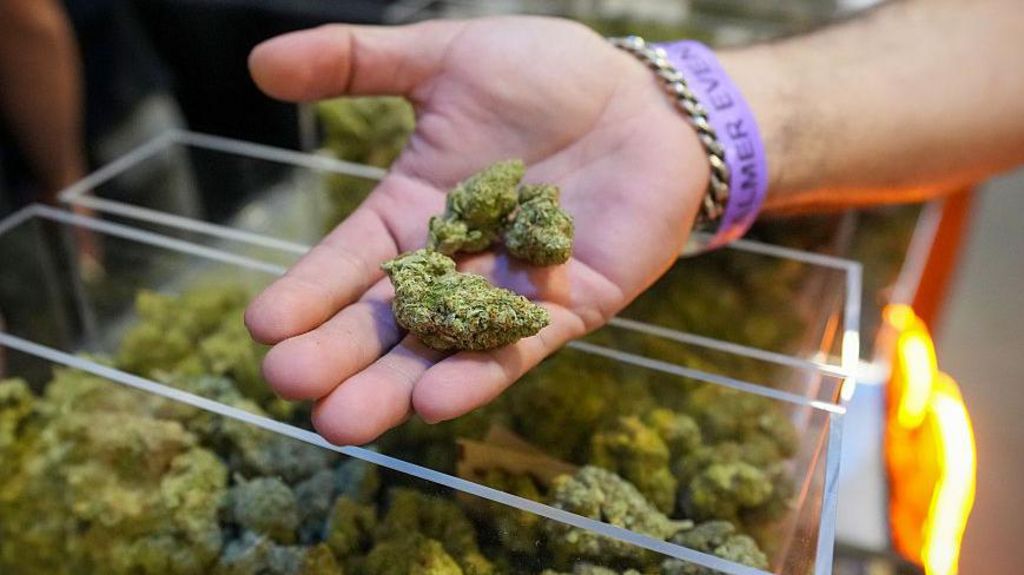
The United States stands on the brink of a historic transformation in its drug policy framework. President Donald Trump is preparing to sign an executive order that would initiate the most substantial overhaul of federal cannabis regulation in over five decades. This long-anticipated action would reclassify cannabis from its current status as a Schedule I narcotic—a category reserved for substances deemed to have no medical value and high abuse potential—to the less restrictive Schedule III classification.
Schedule III substances, which include pharmaceuticals like Tylenol with codeine, ketamine, and anabolic steroids, are recognized by the U.S. Drug Enforcement Agency as having a ‘moderate to low potential for physical and psychological dependence.’ This administrative recalibration, expected to be enacted as early as Thursday according to CBS News, would not equate to federal legalization. However, it would dismantle a significant barrier to scientific inquiry, permitting expanded research into cannabis’s therapeutic applications.
The policy shift carries substantial economic implications. State-authorized cannabis dispensaries, currently operating in a legal gray area, would gain eligibility for certain federal tax deductions from which they are barred under Schedule I restrictions. Reports also indicate the potential establishment of a pilot program to provide reimbursements to older Americans for cannabidiol (CBD) used in managing conditions related to cancer treatments.
This move aligns with a clear national trend. A majority of states have already legalized cannabis for medical purposes, with 24 states and the District of Columbia permitting its recreational use. President Trump has consistently advocated for this reform, stating last year on Truth Social, ‘I believe it is time to end endless arrests and incarcerations of adults for small amounts of marijuana for personal use.’ His position echoes the Biden administration’s earlier, stalled efforts to propose a similar rule change in April 2024.
Despite broad public support—a recent Gallup poll indicated 64% of Americans favor legalization—the proposal faces staunch opposition from within the President’s own party. A cohort of 22 Republican Senators articulated their dissent in an open letter, contending that normalizing cannabis use would hinder national re-industrialization efforts and contradict public health objectives. They cited concerns over impaired judgment and a lack of conclusive scientific evidence supporting medical benefits. Separate correspondence from nine Republican representatives to Attorney General Pam Bondi argued that rescheduling would send a dangerous message to youth about the drug’s safety.