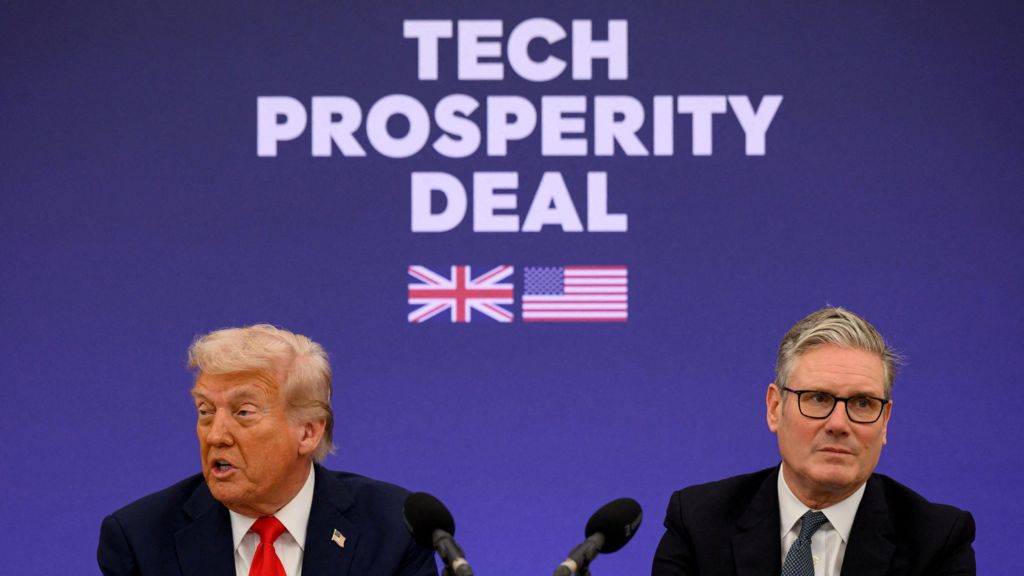
The landmark Technology Prosperity Deal between the United States and United Kingdom has encountered significant obstacles, with negotiations stalling due to unresolved issues in broader trade discussions between the two nations. Initially hailed as “historic” during its announcement in September, the agreement promised enhanced cooperation in artificial intelligence, quantum computing, and advanced nuclear energy technologies.
The current impasse stems primarily from American concerns regarding perceived trade barriers within the UK market. According to sources familiar with the negotiations, disagreements extend to digital regulation frameworks and food safety standards, creating complications for the technology-specific arrangement.
A UK government spokesperson maintained that “our special relationship with the US remains strong,” emphasizing Britain’s commitment to ensuring the deal delivers opportunities for citizens in both countries. The government declined to comment on specific claims regarding negotiation difficulties.
The Technology Prosperity Deal was formally documented through a Memorandum of Understanding (MOU) that outlined ambitious collaboration goals but specified that any proposals were non-binding. The MOU explicitly stated that implementation would only proceed alongside substantive progress in formalizing the wider US-UK Economic Prosperity Deal signed in May.
Industry analysts note that the current stalemate reflects a broader pattern in US-UK trade relations. Allie Renison, director of SEC Newgate UK and former government trade adviser, characterized the approach as “slightly piecemeal,” with different negotiation areas affecting unrelated sectors.
Despite the diplomatic hurdles, the approximately £31 billion in planned investments from tech giants including Microsoft, Nvidia, and Google are believed to remain unaffected. Nvidia CEO Jensen Huang previously expressed confidence in Britain’s potential to become an “AI superpower,” with pledged investments intended to scale up AI infrastructure including data centers across the UK.
Observers suggest the negotiation challenges likely represent strategic positioning within broader trade discussions rather than a fundamental threat to technological cooperation between the two nations.