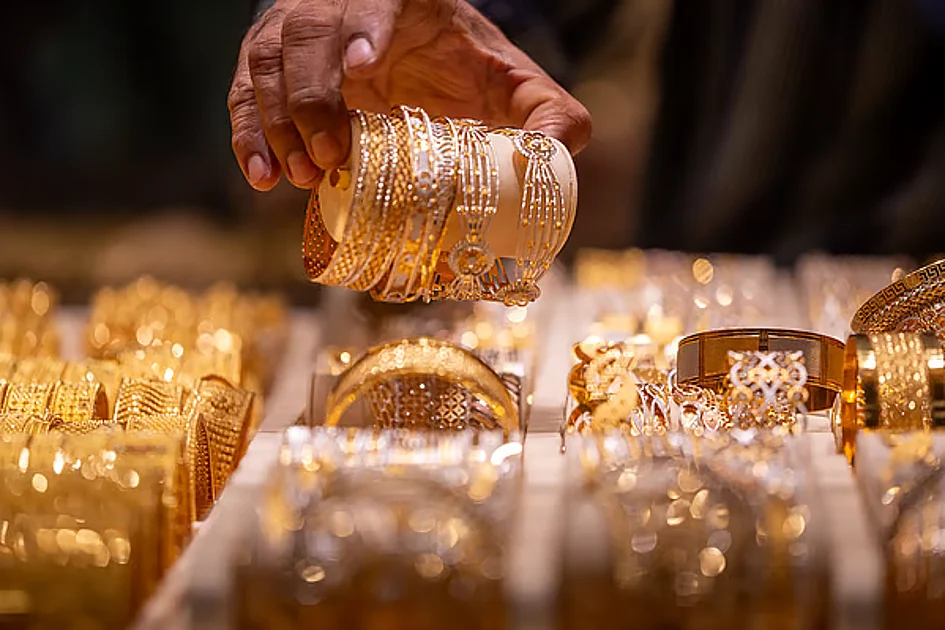
Dubai’s gold market witnessed a slight price adjustment on Tuesday morning following a significant weekend rally, with 24K gold declining to Dh516.75 per gram from Monday’s Dh521.25. The modest pullback occurred alongside broader precious metals softening, with spot gold prices dipping 0.74 percent to $4,274.11 by 9:30 AM local time.
Other gold variants including 22K, 21K, 18K, and 14K traded at Dh478.50, Dh458.75, Dh393.25, and Dh306.75 per gram respectively. Silver mirrored this trend, with spot prices falling 1.76 percent to $62.49.
Market analysts emphasize that the minor correction occurs within a context of remarkable underlying strength. Ole Hansen, Head of Commodity Strategy at Saxo Bank, observed that gold continues trading near October’s record highs following a clear breakout from its recent consolidation pattern around $4,200. “This demonstrates how resilient underlying demand has become,” Hansen noted.
The recent 25-basis-point rate cut by the US Federal Reserve to a 3.5-3.75 percent range has reignited policy debates for 2026, but Hansen suggests gold’s momentum now derives from factors beyond interest rate dynamics. Sustained support emerges from a softer dollar, easing front-end yields, and most significantly, persistent buying by non-western central banks and global real-money investors through exchange-traded funds.
Notably, bullion-backed ETF holdings primarily listed in the US and Europe have surged by approximately 15 million ounces this year, more than compensating for net liquidations over the preceding three years. This trend increasingly reflects strategic moves to reduce dollar dependency rather than short-term currency hedging.
Looking forward, market conditions remain tight with institutional and central bank demand for hard assets showing no signs of diminishing amid political uncertainty, persistent inflation concerns, expanding fiscal deficits, and evolving monetary regimes. Hansen projects gold could reach the $5,000 milestone in 2026, with silver potentially climbing to $75-80 range, bolstered by seasonal patterns that typically strengthen gold following December FOMC meetings through late February.