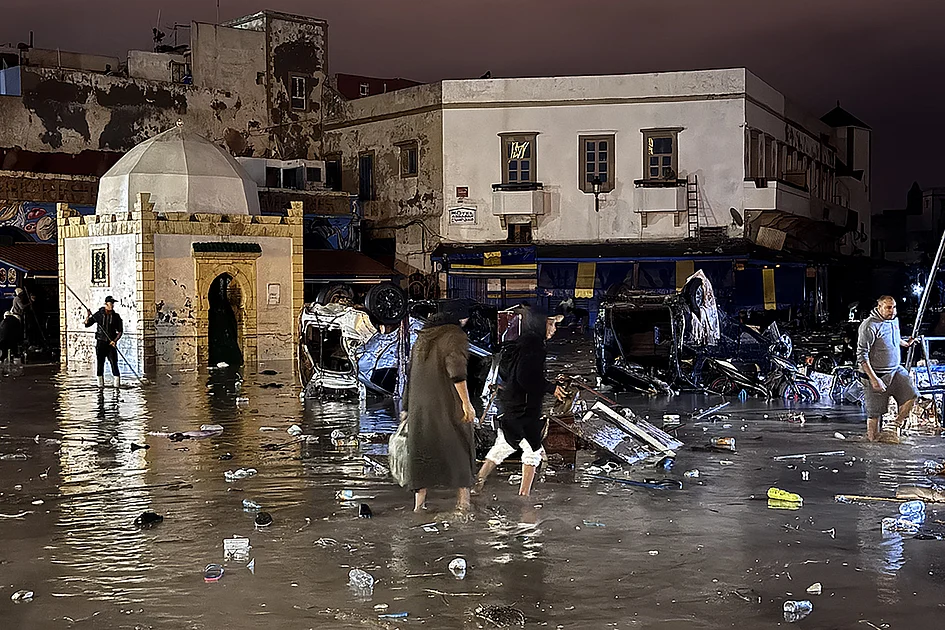
A catastrophic flash flood has devastated the Moroccan coastal town of Safi, resulting in at least 37 fatalities and marking the nation’s deadliest weather-related disaster in over a decade. The tragedy struck on Sunday as a powerful torrent of mud and water surged through the streets, sweeping away vehicles and infrastructure in its path.
Local authorities confirmed that search and rescue operations are ongoing amidst warnings from the General Directorate of Meteorology of additional thunderstorms expected across several regions in the coming days. The historic town center suffered extensive damage with at least 70 homes and businesses flooded, while schools have been closed for a minimum of three days due to debris-clogged streets.
Fourteen survivors are currently receiving medical treatment at Mohammed V Hospital, with two patients in intensive care. Eyewitness accounts describe scenes of utter devastation as residents lost homes, livelihoods, and personal belongings. ‘The water overwhelmed us. We couldn’t sleep all night. We lost everything, even my children’s textbooks,’ recounted Hanane Nasreddine, a mother of six, her voice trembling with emotion.
The commercial impact has been particularly severe in Safi, renowned for its arts and crafts including terracotta pottery. Shopkeeper Abdelkader Mezraoui reported that jewelry and clothing retailers lost their entire inventories, calling for official compensation to save local businesses.
Morocco’s prosecutor’s office has initiated an investigation to determine potential responsibility for the extent of the damage, while local officials convened emergency meetings to implement crisis measures. The disaster occurs against the backdrop of Morocco’s seventh consecutive year of severe drought, with climate scientists noting that warmer atmospheric conditions intensify storm systems by holding increased moisture.
The North African kingdom has experienced similar tragedies in past decades, with flash floods claiming hundreds of lives in 1995 and scores more in 2002, highlighting the region’s vulnerability to extreme weather events exacerbated by climate change.