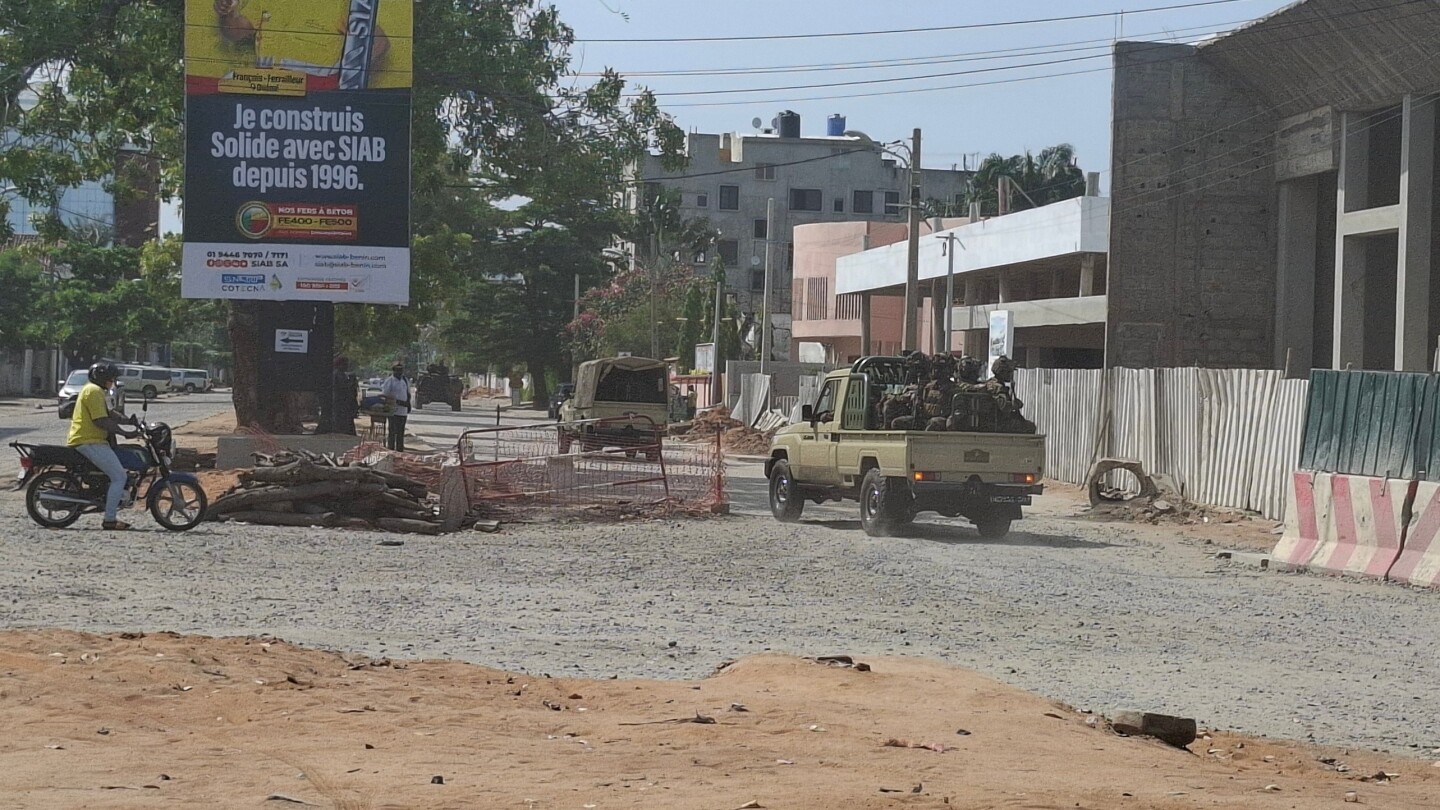
DAKAR, Senegal — West Africa finds itself trapped in a disturbing cycle of military interventions, with Benin becoming the latest nation to experience an attempted coup this Sunday. Soldiers briefly appeared on state television claiming power, only to have President Patrice Talon announce the thwarting of their efforts hours later. This incident follows closely on the heels of Guinea-Bissau’s recent military takeover after a contentious presidential election.
Since 2020, an alarming pattern has emerged across the continent with nine African nations experiencing successful or attempted coups. Analysis reveals this trend stems from compounding factors including deteriorating socioeconomic conditions, institutional fragility, and widespread dissatisfaction with civilian governments’ handling of security challenges.
Beverly Ochieng of Control Risks Group explains: “Throughout West Africa, where military forces maintain significant political involvement, persistent crises like insurgencies and economic hardships frequently motivate soldiers to intervene when they perceive civilian leadership as ineffective.”
The phenomenon extends beyond West Africa. Madagascar witnessed military leaders assuming control in October following youth-led demonstrations demanding President Andry Rajoelina’s resignation. Similarly, Gabon’s oil-rich government was toppled in 2023 when soldiers deposed long-ruling President Ali Bongo immediately after his contested electoral victory.
Chad, Guinea, Sudan, Mali, Burkina Faso, and Niger have all experienced military takeovers in recent years. The Sahel region nations particularly struggle with extremist violence, with juntas often justifying their actions as necessary measures to restore security.
A striking pattern emerges in the colonial origins of affected nations. With exceptions including former British colony Sudan and Portuguese-colonized Guinea-Bissau, most recent coups have occurred in former French territories.
Bakary Sambe of the Timbuktu Institute notes: “Francophone Africa’s political systems, heavily influenced by France’s centralized presidential model combined with ongoing economic dependence, create conditions ripe for military intervention. Weak governance, corruption, and ineffective response to jihadist threats provide fertile ground for armies positioning themselves as national saviors.”
Conversely, former British colonies generally demonstrate greater stability. Sambe attributes this to “more decentralized institutions, diversified economies, and reduced external monetary control” inherited from British colonial administration.
Ochieng further elaborates: “Anglophone African nations typically maintain clearer separation between military, executive, and judicial powers. This institutional distinction creates more stable democratic transitions and reduces confusion about authority structures.”
As military rulers increasingly participate in elections themselves—as seen in Guinea where coup leader Mamady Doumbouya plans to run for presidency—the region faces fundamental questions about democratic consolidation and civilian governance.