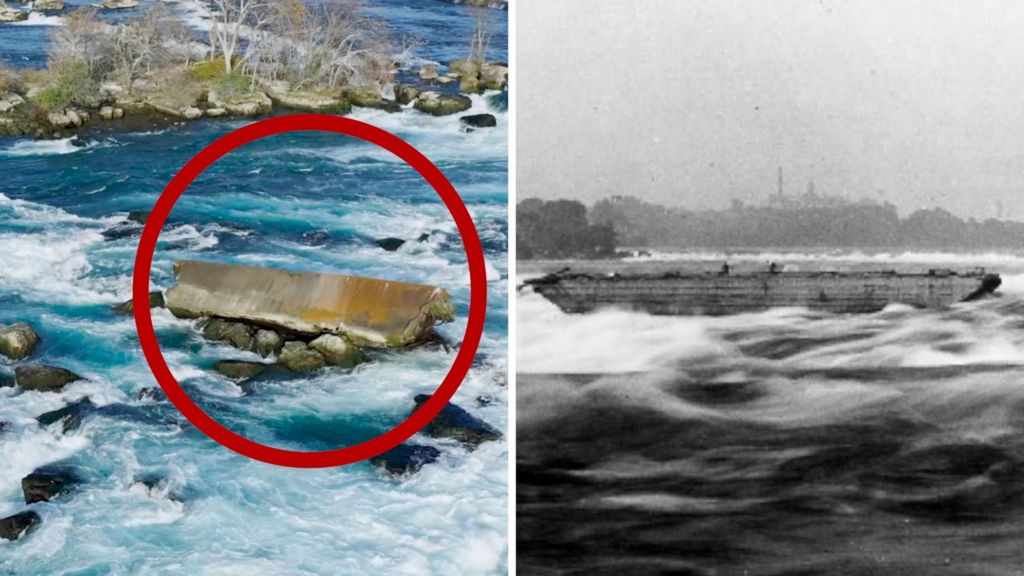
A century-old shipwreck at Niagara Falls, renowned for one of the most dramatic rescue operations in the landmark’s history, is now advancing toward the precipice. Recent environmental movements have dislodged the early 20th-century barge from its longstanding position, carrying it further from its original 1918 grounding site and closer to the waterfall’s edge.
The vessel entered historical records following its accidental separation from a towing tug during a storm, which led to its stranding in the rapid currents above the falls. The incident culminated in a perilous rescue mission that successfully saved two American crew members from the beleaguered barge, an event that was widely publicized at the time.
Experts monitoring the site confirm that natural elements, including ice flows and powerful hydraulic forces, are responsible for the wreck’s gradual migration. This movement poses new questions regarding its eventual fate—whether it will remain lodged or continue its trajectory toward the cascade—and highlights the dynamic, ever-changing geology of the Niagara River.
The ongoing shift has attracted renewed attention from historians, preservationists, and engineers, prompting discussions on potential measures to document or stabilize the structure. However, the formidable and treacherous nature of the river makes any intervention exceptionally challenging.