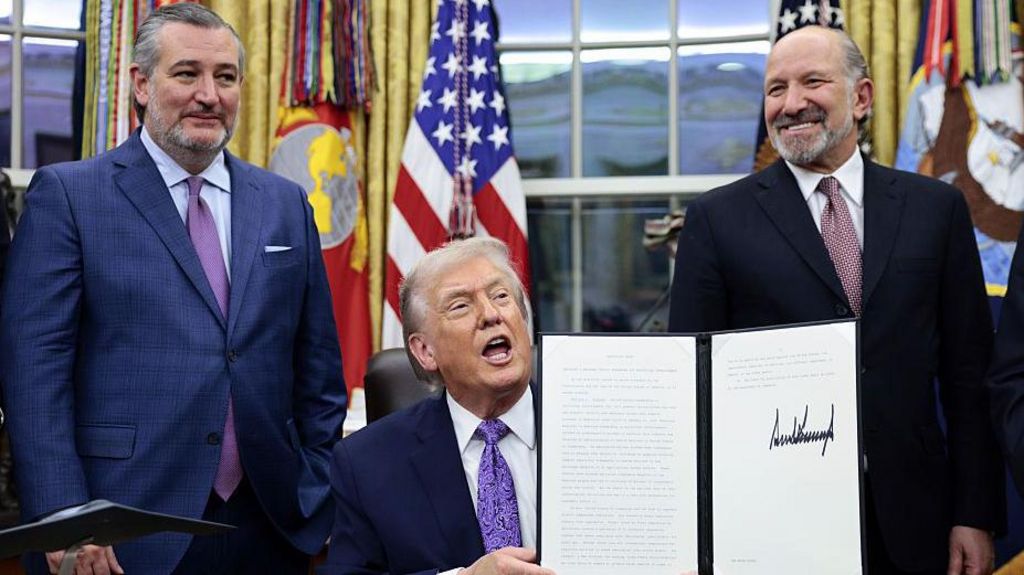
In a significant move to centralize artificial intelligence governance, President Donald Trump has issued an executive order prohibiting individual states from implementing their own AI regulatory frameworks. The Oval Office signing ceremony on Thursday featured key administration officials who characterized the order as essential for maintaining America’s competitive edge in the global AI race.
President Trump emphasized the need for unified national standards, stating, “We want to have one central source of approval” to prevent a patchwork of conflicting state regulations. White House AI adviser David Sacks clarified that the administration would target only the most “onerous” state rules while permitting regulations concerning children’s safety.
The decision represents a major victory for technology behemoths including OpenAI, Google, Meta, and Anthropic, which have consistently advocated for federal preemption of state AI laws. Industry leaders contend that fragmented regulatory approaches could stifle innovation and impede the United States’ ability to compete with China’s substantial investments in artificial intelligence.
However, the executive order has ignited immediate opposition from several states with established AI regulatory frameworks. California Governor Gavin Newsom, a frequent Trump critic, issued a scathing statement accusing the president of “ongoing grift in the White House” and attempting to “enrich himself and his associates” at the expense of public safety. California recently enacted comprehensive AI legislation requiring major developers to submit risk mitigation plans for their models.
Beyond California, states including Colorado and New York have developed their own AI regulatory measures. Advocacy groups have joined the opposition, with Julie Scelfo of Mothers Against Media Addiction arguing that the order “undermines states’ basic rights to establish sufficient guardrails to protect their residents.” Critics maintain that state-level regulations are necessary absent meaningful federal standards for AI development and deployment.