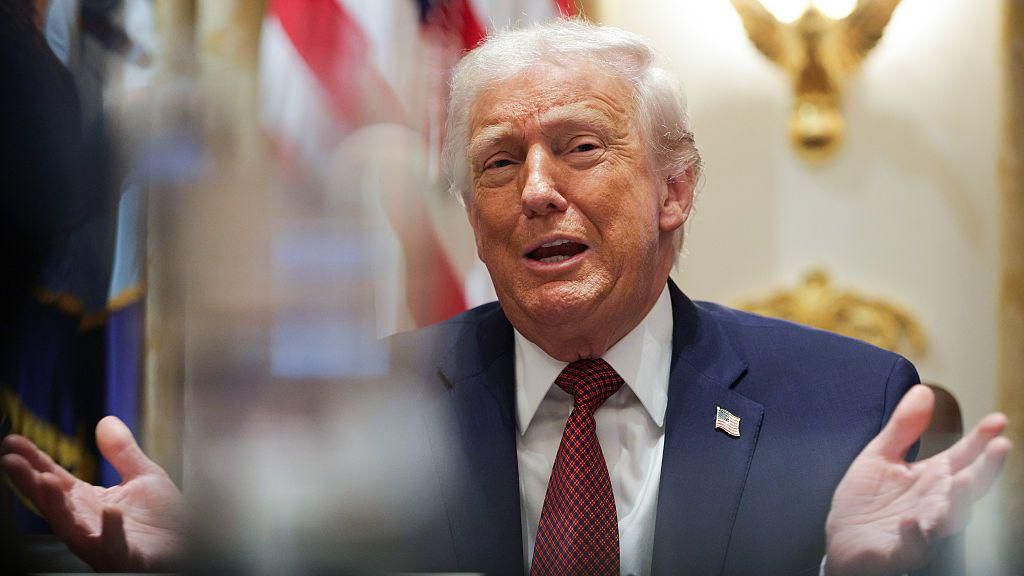
President Donald Trump is escalating his economic messaging campaign with a Tuesday rally in Mount Pocono, Pennsylvania, as polling indicates declining public trust in his administration’s economic stewardship. The event comes amid Republican anxieties about the 2026 midterm elections following Democratic gains in November contests where affordability concerns proved decisive.
The President’s Pennsylvania appearance represents a strategic effort to reframe the economic narrative after acknowledging that rising prices contributed to disappointing Republican performances in recent elections. Trump has consistently attributed ongoing economic challenges to his predecessor Joe Biden, asserting at a White House briefing Monday that ‘Democrats caused the affordability problem and we’re the ones that are fixing it.’
Recent economic indicators present a complex picture. September data revealed U.S. inflation reached 3% for the first time since January, while consumer confidence plummeted to its lowest level since April. Polling from Politico and CBS News/YouGov suggests significant voter unease, with half of all respondents describing the current cost of living as the worst in their lifetimes, and Trump’s economic approval rating dropping 15 points since March.
The administration is responding with policy measures and rhetorical offensive. A source familiar with Tuesday’s event indicated Trump will highlight efforts to reduce costs for gasoline and groceries, while a White House official previewed messaging that will frame the president’s tariffs and regulatory reductions as part of a comprehensive economic ‘rewiring.’
This Pennsylvania visit carries particular significance as it occurs in the state’s 8th Congressional District, a Republican-held seat won narrowly in 2024 that has emerged as a key battleground for the upcoming midterms. White House Chief of Staff Susie Wiles, who managed Trump’s presidential campaign, indicated this rally will inaugurate an aggressive campaign schedule reminiscent of the 2024 election cycle.
The administration points to several policy achievements as evidence of their economic approach, including prescription drug pricing agreements, eased fuel efficiency standards, tax cut extensions, and the recently signed ‘One Big Beautiful Bill.’ Monday also saw the announcement of a $12 billion farm aid package targeting agricultural sectors affected by low crop prices and tariff impacts.
Democratic leaders are mounting coordinated counter-messaging. Pennsylvania Governor Josh Shapiro told media ahead of Trump’s visit that ‘folks can’t unsee what they see when they go to the grocery store,’ citing specific price increases for beef, orange juice, and bread under Trump’s administration.
Economic experts note the complexity of presidential influence on food pricing. Food economics professor David Ortega recently noted that ‘the president of the United States has very little control over the price of food, especially in the short term,’ while acknowledging that Trump’s policies—including tariffs on Brazilian coffee and immigration crackdowns affecting farm labor—may be contributing to specific price increases.