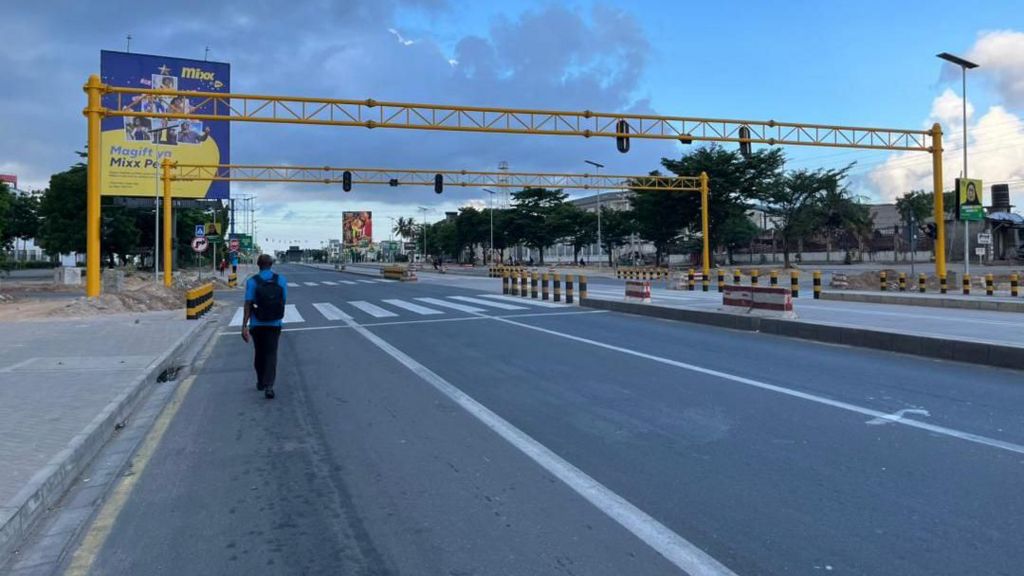
Tanzanian cities remained under a veil of heightened security and palpable tension as authorities deployed police and military forces to patrol major urban centers. This significant security reinforcement comes in response to calls for anti-government demonstrations, strategically planned to coincide with the nation’s Independence Day celebrations, which have been officially cancelled.
In an unusual departure from their typical weekday bustle, metropolitan hubs including Dar es Salaam, Arusha, Mbeya, and Mwanza reported markedly subdued activity. By midday, the anticipated protests had not materialized, with many citizens opting to remain indoors amid widespread uncertainty. BBC correspondents observed nearly deserted streets in the commercial capital, creating a stark contrast to the city’s normally vibrant atmosphere.
The planned demonstrations stem from ongoing demands for political reforms following October’s post-election unrest, which resulted in an unspecified number of casualties. Authorities have acknowledged employing force against protesters, justifying their actions as necessary to prevent what they characterize as attempts to overthrow the current regime.
Security vehicles were visibly patrolling major thoroughfares and intersections, while officers established strategic positions around critical public infrastructure. Motorists reported encountering frequent checkpoints where security personnel rigorously questioned travelers about their destinations.
On digital platforms, activists encouraged supporters to maintain vigilance, suggesting that any protest activities would likely commence during afternoon hours—a pattern consistent with previous demonstrations in Tanzania. The government has refrained from issuing detailed statements regarding either the enhanced security measures or the banned protests.