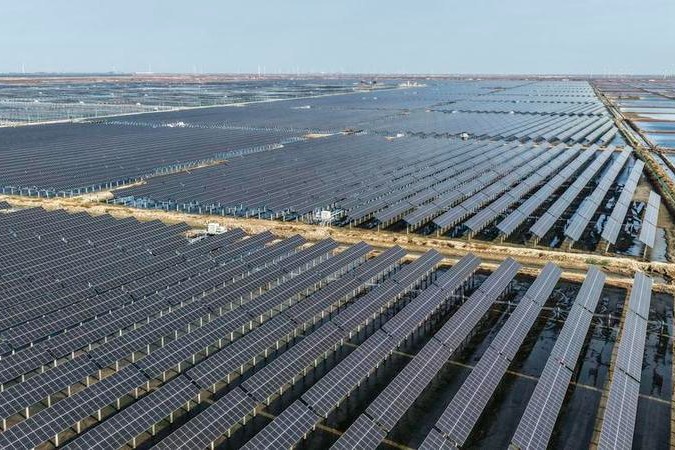
UN Environment Programme Executive Director Inger Andersen has characterized China’s extraordinary acceleration in renewable energy deployment as a transformative force in global climate efforts. Speaking exclusively to China Daily ahead of the seventh UN Environment Assembly in Nairobi, Andersen emphasized that China’s unprecedented scale of clean energy installation—projected to reach 3,600 gigawatts by 2035—demonstrates remarkable achievements through strategic long-term planning, industrial capability, and coherent policy implementation.
Andersen highlighted that China’s manufacturing dominance has produced significant global spillover effects, dramatically reducing renewable technology costs worldwide. Solar energy prices have plummeted to an average of 3.3 US cents per kilowatt-hour, making clean energy increasingly accessible, particularly across Global South nations. This cost reduction, coupled with expanded availability, represents what Andersen termed ‘magnificent progress’ in the worldwide transition to sustainable energy.
Beyond energy generation, China’s rapidly evolving electric vehicle ecosystem—encompassing two-wheelers, buses, and passenger cars—is expanding throughout Asia, Africa, and Latin America. Local assembly operations in developing countries are already generating employment opportunities, improving urban air quality, and facilitating the transition to low-emission transportation networks.
A recent UNEP report corroborates Andersen’s assessment, identifying China’s renewable energy expansion as one of the most decisive factors shaping global climate action. The report notes that China’s projected capacity—six times its 2020 level—could substantially narrow the emissions gap by accelerating clean energy deployment internationally. For developing economies, China’s model of scaling manufacturing, reducing costs, and enabling technology transfer offers a practical blueprint for enhancing South-South cooperation.
Andersen concluded that China’s coordinated industrial policy provides a powerful example of how rapid, large-scale progress toward Paris Agreement goals can be achieved, offering valuable lessons for all nations committed to climate action.