KYIV, Ukraine — The strategic landscape of Black Sea naval operations has undergone a radical transformation through Ukraine’s innovative deployment of unmanned maritime systems, according to exclusive insights from the nation’s elite drone warfare unit. The commander of Group 13, Ukraine’s specialized sea-drone division operating under military intelligence protocols, revealed that Russian naval forces have been compelled into dramatically restricted operations due to persistent drone threats.
In a secured location with his identity protected, the officer known by call sign ’13th’ described how Ukraine’s drone campaigns have created an effective maritime blockade situation. “Russian vessels now rarely venture beyond 25 miles from their ports,” he stated. “Their primary activity consists of rapid missile launches followed by immediate retreat—a significant tactical constraint directly attributable to our drone operations.
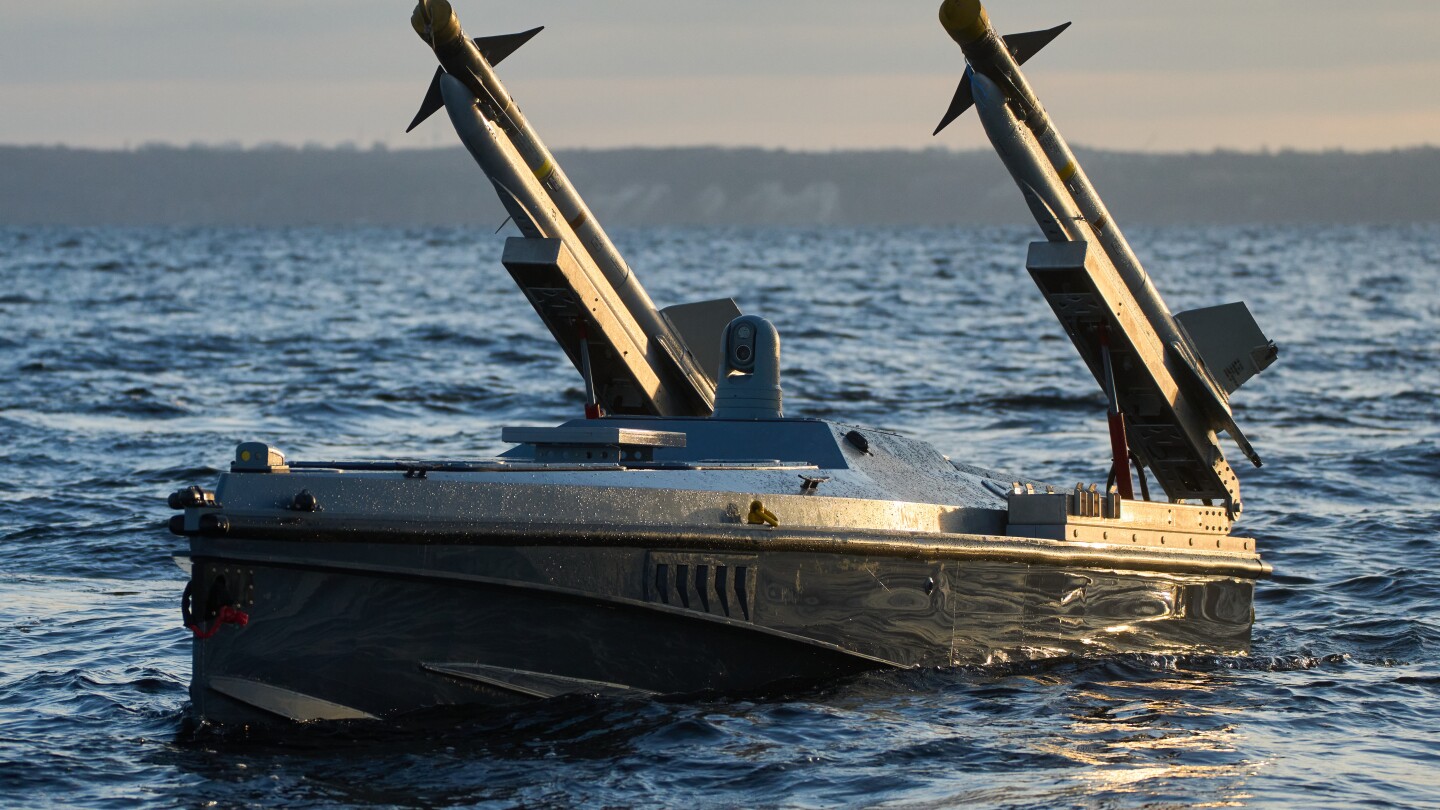
The technological evolution of Ukraine’s drone arsenal includes two primary variants: the compact V5 ramming drone and the more sophisticated V7 weapons platform. These systems are operated via portable console units featuring joystick controls and multiple safety mechanisms. In a notable advancement, operators have successfully modified V7 drones to carry adapted Sidewinder air-to-air missiles, achieving the unprecedented May 2023 downing of a Russian fighter jet—an event the commander characterized as a “revolutionary moment in naval warfare.”
Looking toward 2024, the officer outlined plans for increasingly sophisticated strikes incorporating artificial intelligence systems. “We are transitioning toward autonomous target identification capabilities,” he explained. “Future drones will independently distinguish military from civilian vessels and make critical engagement decisions using extensive operational data collected throughout the conflict.”
Ukraine is simultaneously pursuing international partnerships to enhance its drone capabilities. Recent agreements with Greece include collaborative production of maritime UAVs, expanded training exercises, and intelligence sharing regarding maritime security threats. Similar cooperation initiatives with other NATO members are underway as Ukraine seeks to maintain technological superiority.
Despite Russia’s adaptive countermeasures, the commander affirmed that Ukraine’s drone program maintains strategic effectiveness. “We have created a situation where we consistently limit enemy movements while developing next-generation capabilities,” he concluded. “The current equilibrium represents not stagnation but preparation for the next phase of autonomous naval warfare.”