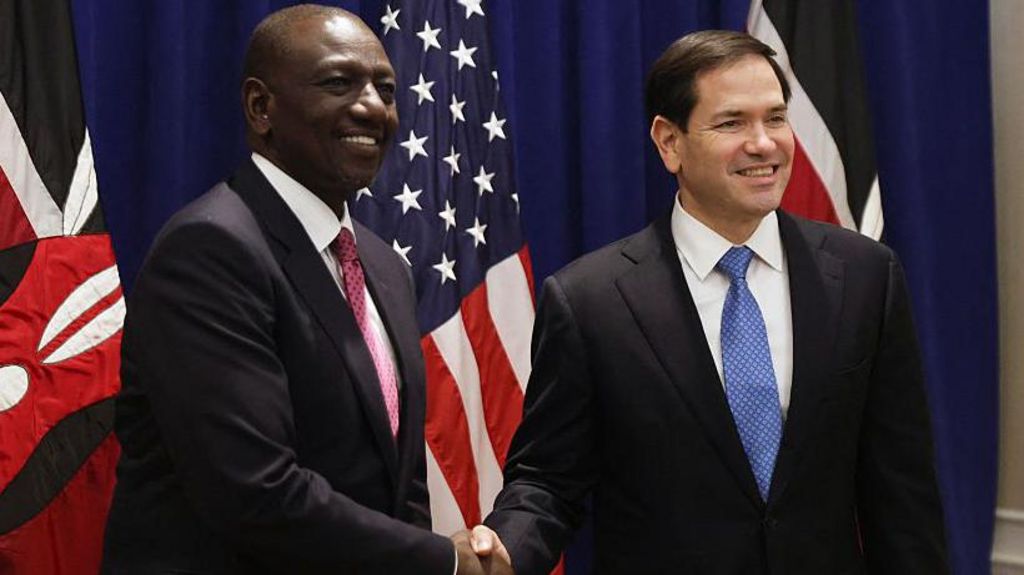
In a significant departure from traditional aid models, the United States and Kenya have formalized a groundbreaking five-year health agreement valued at $2.5 billion. This pact represents the inaugural implementation of the Trump administration’s restructured foreign assistance approach, which prioritizes direct government-to-government partnerships over conventional channels.
The comprehensive health initiative allocates $1.7 billion from US contributions alongside Kenya’s $850 million commitment, establishing a framework where Nairobi will progressively assume greater financial responsibility. The collaboration specifically targets HIV/AIDS, malaria, tuberculosis prevention and treatment, alongside maternal healthcare, polio eradication, and infectious disease outbreak preparedness.
US Secretary of State Marco Rubio, during the signing ceremony with Kenyan President William Ruto, emphasized the strategic nature of the partnership, acknowledging Kenya as a “longstanding American ally” and praising its international contributions, particularly regarding peacekeeping operations in Haiti. The agreement forms part of the broader “America First Global Health Strategy” introduced in September, which conditions assistance on bilateral negotiations aimed at reducing perceived inefficiencies in traditional aid distribution.
Despite official assurances, the arrangement has generated substantial debate regarding data privacy protections. Concerns have emerged that the partnership might grant US authorities access to sensitive Kenyan health databases containing patient information. Health Minister Aden Duale has actively addressed these apprehensions, clarifying that only de-identified, aggregated data would be shared under strict adherence to Kenyan legal protections.
The agreement emerges against the backdrop of substantial reductions in US foreign aid, including the dismantling of USAID and billions in assistance cuts to developing nations initiated during Trump’s first presidential day. These reductions have previously triggered medication shortages across multiple recipient countries.
US officials indicate this Kenya arrangement serves as a prototype for similar health partnerships with other African nations aligned with US foreign policy objectives, with additional agreements anticipated before year’s end.