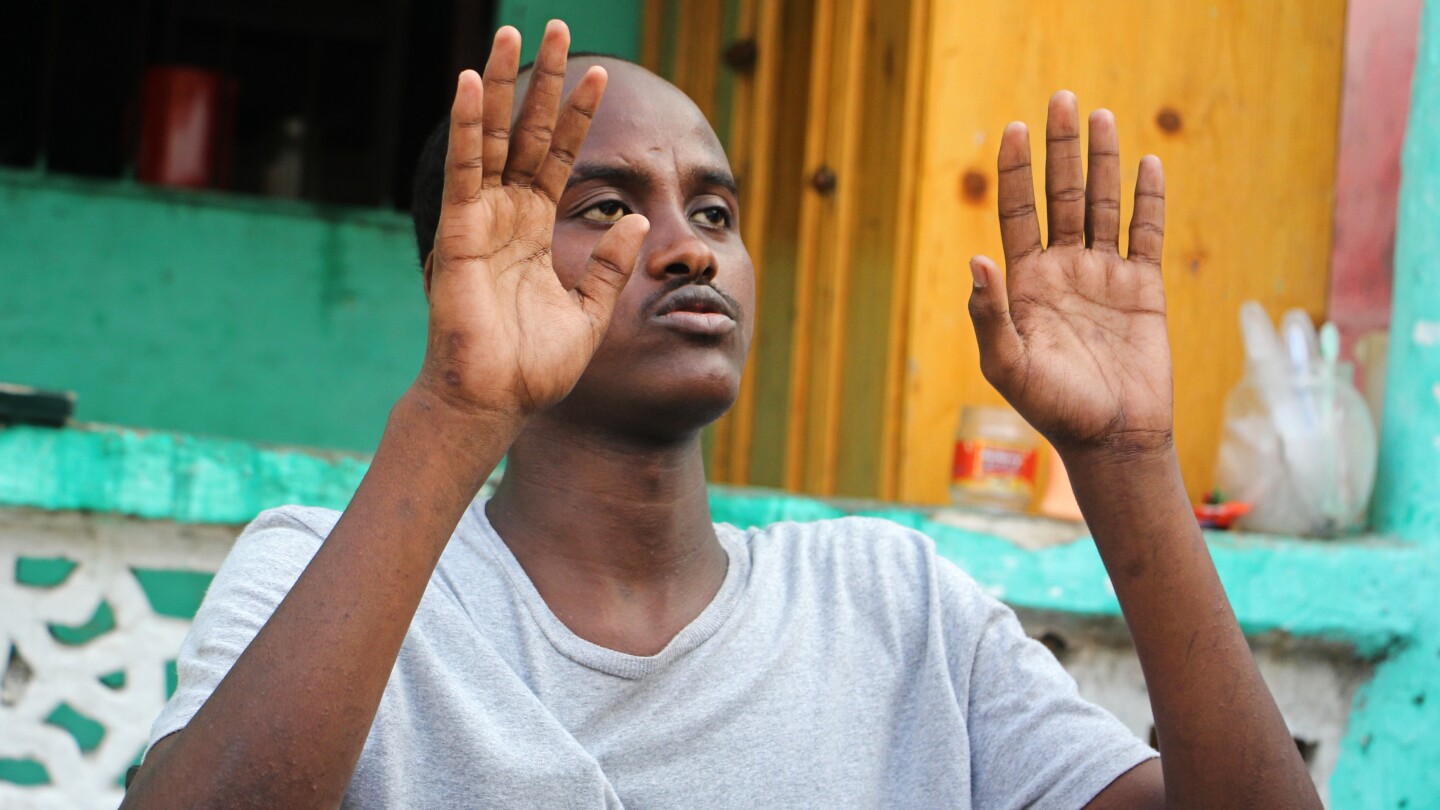
MOGADISHU, Somalia — Mohamed Abdi Awale’s harrowing quest for a better life in Western nations culminated in unimaginable suffering, yet his resolve remains unbroken. Recently repatriated from Libya among 165 Somali migrants, Awale represents the countless individuals risking everything despite increasingly restrictive immigration policies.
Awale’s 5,000-kilometer odyssey began in Mogadishu, traversing Kenya, Uganda, South Sudan, and Sudan before his capture near the Sudan-Libya border. In the Sahara oasis town of Kufra, smugglers subjected him to systematic torture, filming the brutality to extort $17,000 from his desperate family. “Torture became normal,” Awale recounted. “They beat you until you fainted. Some people lost their minds. Others didn’t survive.”
His mother, Hawo Elmo Rage, turned to social media when confronted with the ransom demand, pleading with the global Somali diaspora to save her son. “They told me to send the money or they would take his life,” she explained.
After his release, Awale’s ordeal continued as his vehicle broke down en route to the Mediterranean coast, forcing a grueling two-week trek through the desert where starvation and dehydration nearly claimed their lives. Subsequent detention in Libyan prisons near Sirte and Tripoli preceded his eventual repatriation in November.
Awale joins approximately 3.5 million internally displaced Somalis and hundreds of thousands who have fled the country’s three-decade civil war. While most refugees remain in neighboring countries like Kenya, many aspire to reach Western nations despite mounting obstacles.
The Trump administration’s travel ban targeting Somalia and eleven other nations, implemented in June, forced Awale to redirect his ambitions toward Europe. Additional restrictions announced this week further complicate immigration prospects for Somalis. Despite these barriers and anti-immigrant rhetoric from the White House, Awale clings to his childhood dream of eventually reaching the United States. “My dream was America, but I felt like Trump closed that door,” he reflected. “Maybe after Trump’s term ends.”
His mother, while fearful for his safety, acknowledges his pursuit of opportunity: “I want him to stay. But I know he wishes for a better life. I pray God gives him a safe future—not the dangerous one he found.”