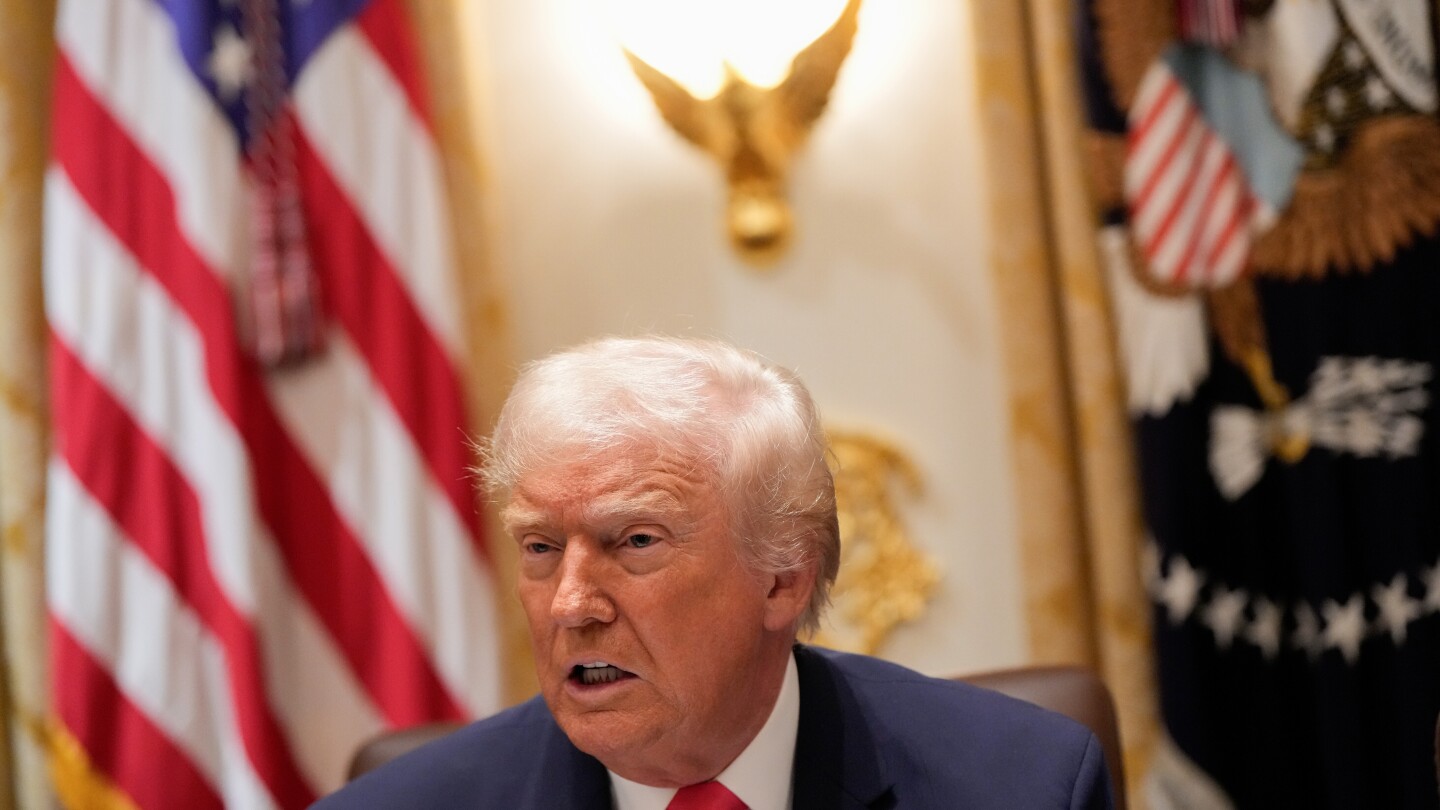
President Donald Trump intensified his longstanding anti-immigrant rhetoric during Tuesday’s Cabinet meeting, repeatedly referring to Somali immigrants as “garbage” and demanding their removal from the United States. The president made these derogatory comments four times within seven seconds, subsequently stating five times that the nation’s 260,000 people of Somali descent were unwanted in America.
The controversial remarks received enthusiastic approval from assembled Cabinet members, with Vice President JD Vance visibly pumping his fist and Defense Secretary Pete Hegseth offering on-camera praise. This incident represents the latest escalation in rhetoric that began during Trump’s 2015 presidential campaign announcement when he characterized Mexican immigrants as “rapists.”
Historical context reveals that Trump’s language echoes previous periods of anti-immigrant sentiment in American history, including 19th century anti-Chinese fear-mongering and World War II-era Japanese American internment. A comprehensive study published in the Proceedings of the National Academy of Sciences analyzing 200,000 congressional speeches and 5,000 presidential communications on immigration from 1880-2020 identified Trump as the first modern president to express more negative sentiment toward immigration than the average member of his own party.
The president’s comments drew immediate condemnation from Minneapolis to Mogadishu. Somali capital resident Ibrahim Hassan Hajji told AP that his view of the United States had “changed dramatically,” while Minnesota Representative Ilhan Omar, whom Trump specifically targeted, characterized his “obsession” with Somali-Americans as “creepy and unhealthy.”
Internationally, experts expressed concern that Trump’s rhetoric from the “highest pulpit in the world’s biggest economy” could empower similar discourse globally. Paris lawyer Arié Alimi, who specializes in hate speech cases, noted that such comments from a world leader represent crossing “a very, very important threshold in terms of expressing racist comments.” Despite criticism, Trump remained unapologetic, stating: “I hear somebody say, ‘Oh, that’s not politically correct.’ I don’t care. I don’t want them.”