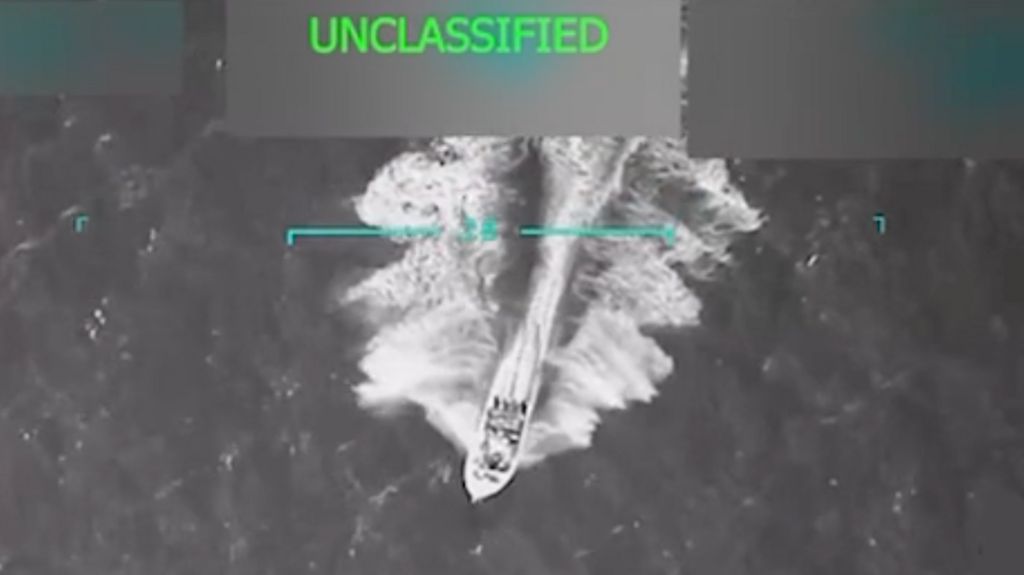
A controversial U.S. military strike against a suspected narcotics vessel in the Caribbean has ignited significant bipartisan scrutiny in Congress, with emerging details suggesting potential violations of international armed conflict protocols. The incident, which occurred on September 2nd, represents the inaugural operation in an ongoing campaign against drug traffickers that has resulted in over 80 fatalities across Caribbean and Eastern Pacific waters.
President Trump initially announced the operation to reporters in the Oval Office, claiming the vessel was transporting drugs from Venezuela. Later that day, he utilized his Truth Social platform to identify the casualties as members of Tren de Aragua, a Venezuelan gang recently designated as a foreign terrorist organization. The accompanying video footage showed the boat being struck by munitions and erupting in flames.
The narrative grew increasingly complex as administration officials provided conflicting accounts. While Trump asserted the vessel was destined for the United States, Secretary of State Marco Rubio initially suggested it was headed toward Trinidad or other Caribbean nations, later revising his statement to align with the president’s claim. Defense Secretary Pete Hegseth maintained he witnessed the strike live and authorities knew precisely who occupied the vessel.
The situation escalated dramatically on November 28th when The Washington Post reported that two individuals had survived the initial strike, only to be killed in a subsequent attack allegedly ordered by Hegseth. Both the Defense Secretary and Pentagon spokespersons vehemently denied these allegations, characterizing them as fabricated and inflammatory.
This revelation prompted bipartisan concern among lawmakers. Senator Tim Kaine (D-VA) suggested the reported ‘double-tap’ strike could constitute a war crime if verified, while Representative Mike Turner (R-OH) noted the operation fell completely outside congressional discussions regarding military campaigns.
In a significant development, White House Press Secretary Karoline Leavitt confirmed on December 1st that a follow-up strike had indeed been ordered—not by Hegseth, but by Navy Admiral Frank Bradley, then-commander of Joint Special Operations Command. Leavitt defended Bradley’s decision as legally justified and within his operational authority.
During extensive White House deliberations, Hegseth acknowledged observing the initial strike but attributed his inability to identify survivors to the ‘fog of war’ and extensive wreckage. President Trump subsequently distanced himself from the secondary strike decision while maintaining support for his defense secretary and characterizing the entire operation as a singular engagement.
Legal experts have raised serious concerns, with former Air Force Secretary Frank Kendall suggesting that under normal circumstances, such actions would warrant court-martial proceedings. With mounting political pressure, Admiral Bradley was scheduled to brief lawmakers behind closed doors on December 4th regarding the operational details.