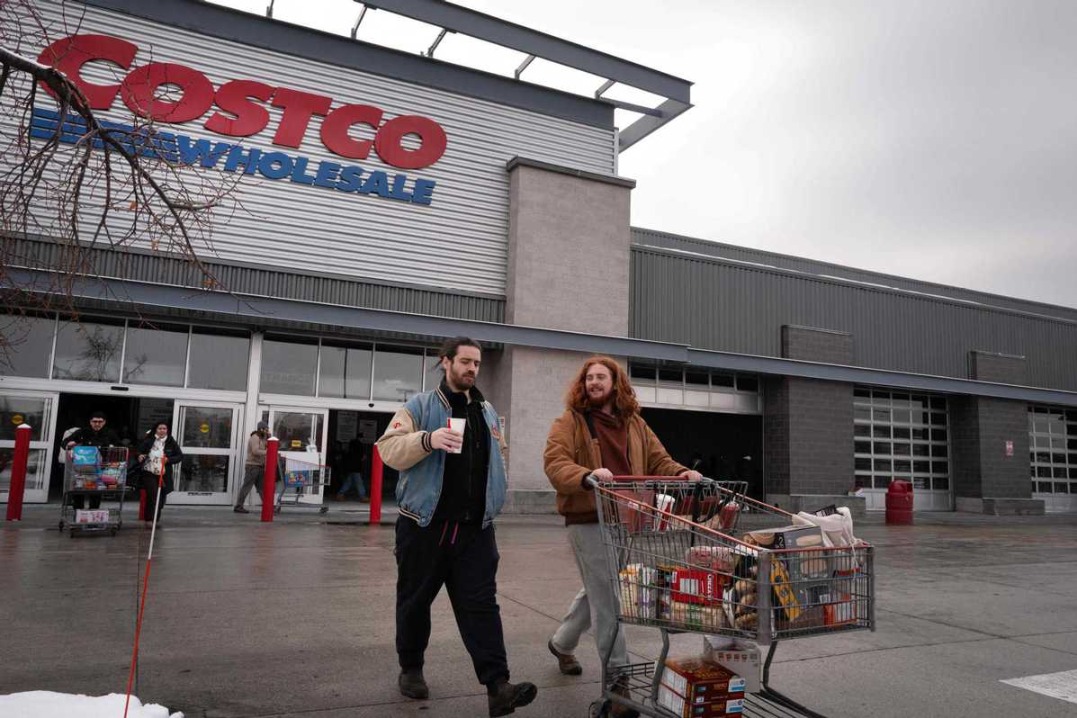
Retail giant Costco Wholesale Corporation has initiated legal proceedings against the United States government, joining a coalition of major corporations seeking reimbursement for tariffs paid under the Trump administration’s emergency measures. The lawsuit, filed in federal court, contends that these levies were imposed unlawfully and seeks refunds contingent upon a Supreme Court ruling against their legality.
The legal challenge centers on former President Donald Trump’s utilization of the Emergency Powers Act to implement sweeping tariffs beginning in April. These measures initially imposed minimum 10 percent duties on most nations, with additional tariffs reaching up to 145 percent specifically targeting China, Canada, and Mexico—justified under the declaration of a “fentanyl emergency.”
During Supreme Court oral arguments last month, justices expressed skepticism regarding the constitutional basis for presidential tariff imposition. Justice Sonia Sotomayor notably questioned the bypassing of Congressional authority, stating: “The Constitution is structured so that if I’m going to be asked to pay for something as a citizen, that it’s through a bill that is generated through Congress.”
Costco’s filing argues that while the Emergency Powers Act permits the president to regulate foreign transactions during national emergencies, it contains no specific provision for tariff implementation—a power explicitly delegated to Congress by the Constitution. The company joins dozens of retailers including Revlon, Kawasaki Motors, Ray-Ban, Bumble Bee Foods, and Yokohama Tires in similar litigation.
Although Costco has not specified the exact refund amount sought, customs data estimates approximately $90 billion in tariffs collected under the emergency measures. The company acknowledges the business impact of these tariffs, with CFO Gary Millerchip noting in a September conference call that mitigation strategies included increased reliance on local sourcing and the Kirkland brand, plus production relocation where feasible.
The Supreme Court is now hearing the case on an accelerated basis following contrary rulings from both the U.S. Court of International Trade and the U.S. Court of Appeals. No timeline has been announced for the final decision that will determine the legality of the tariff implementation method.