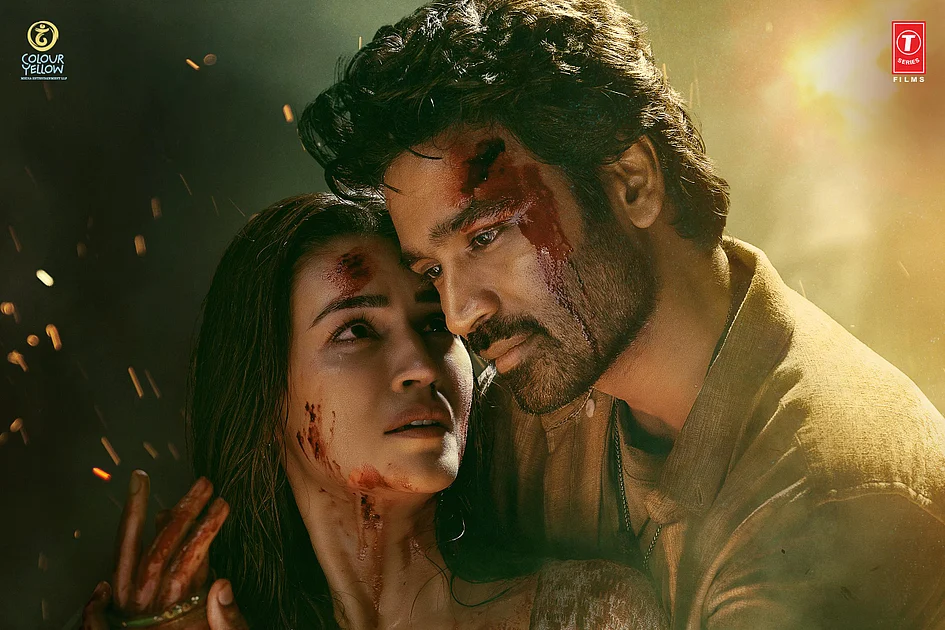
Aanand L. Rai’s latest cinematic offering ‘Tere Ishk Mein’ presents audiences with a challenging dichotomy: either a nuanced exploration of destructive relationships or an incoherent narrative attempting to tackle too many themes simultaneously. Starring Dhanush as Shankar, a violence-prone college student immersed in campus politics, and Kriti Sanon as Mukti, a PhD researcher studying psychological rehabilitation, the film navigates troubled romantic waters where consent becomes negotiable and obsession masquerades as devotion.
The narrative follows Shankar’s transformation from a petrol-bomb-throwing agitator to a UPSC aspirant, motivated solely by his unrequited fixation on Mukti. Their dynamic evolves through psychologically manipulative interactions, with Mukti initially maintaining professional boundaries while studying Shankar’s violent tendencies. The film’s Delhi ecosystem—from stark class divisions to IAS elitism—provides compelling backdrop to this toxic dance.
Technical achievements shine through AR Rahman’s evocative musical score and standout performances, particularly Dhanush’s authentic portrayal of Tamil roots and Prakash Raj’s poignant supporting role as Shankar’s father. A particularly effective scene reveals Mukti’s privileged awakening when visiting Shankar’s humble dwelling.
However, the screenplay collapses under its own ambitious weight, abandoning narrative logic for melodramatic contrivance. Mukti’s professional credibility diminishes as she continues assessing Shankar while pregnant and emotionally compromised—a scenario defying realistic defense protocol. The film’s third act introduces baffling metaphysical explanations about salvation (mukti) and sacrifice that feel unearned, while Shankar’s redemption as a fighter pilot seems conveniently miraculous rather than psychologically earned.
The fundamental question remains whether ‘Tere Ishk Mein’ critiques toxic masculinity or inadvertently glorifies it. While the film acknowledges its characters’ flaws more explicitly than previous Rai works like ‘Raanjhana’, it ultimately drowns in its own philosophical aspirations, leaving audiences more bewildered than enlightened about modern romance’s complexities.