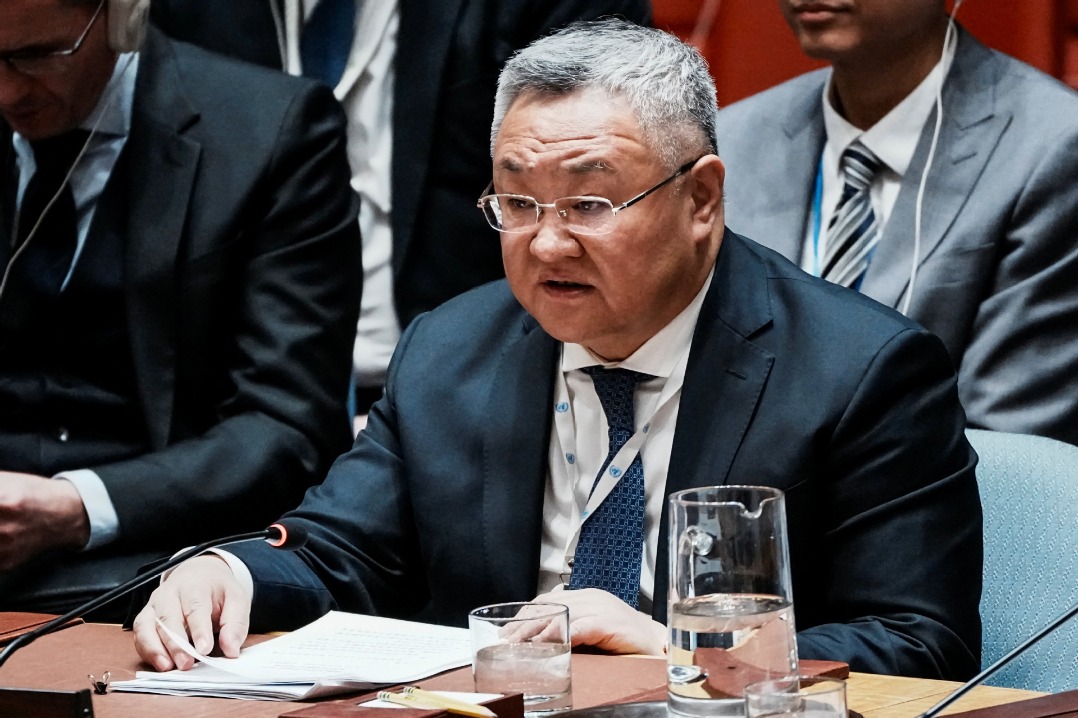
In a significant diplomatic escalation at the United Nations, China’s Permanent Representative Ambassador Fu Cong has delivered a second formal communication to Secretary-General António Guterres, vehemently rejecting Japan’s position regarding Taiwan. This development marks the latest chapter in an ongoing exchange of diplomatic correspondence between the two Asian powers at the international forum.
The controversy stems from November 7th remarks by Japanese Prime Minister Sanae Takaichi, who suggested during a Diet session that a potential ‘Taiwan contingency’ could constitute a ‘survival-threatening situation’ for Japan, implying possible military involvement. Ambassador Fu characterized these statements as fundamentally challenging the outcomes of World War II, undermining the post-war international order, and violating core principles of the UN Charter.
In his meticulously argued communication, the Chinese diplomat challenged Japan’s claim of maintaining a ‘consistent position’ on Taiwan, demanding Tokyo provide the international community with a ‘complete and accurate explanation’ of its stated policy. Fu substantiated China’s sovereignty claims by invoking foundational legal instruments including the Cairo Declaration, Potsdam Proclamation, and the Japanese Instrument of Surrender.
The ambassador further referenced the landmark 1972 Sino-Japanese Joint Statement, wherein Japan explicitly recognized the People’s Republic of China as the sole legitimate government and acknowledged Taiwan as ‘an inalienable part of China’s territory.’ Fu dismissed Japan’s assertion that Prime Minister Takaichi’s remarks aligned with an ‘exclusively defense-oriented’ strategy, noting that linking Japan’s survival to Taiwan scenarios ‘clearly goes beyond passive defense’ and represents ‘self-contradictory arguments intended to mislead the international community.’
The communication concluded with a stern warning against Japan’s perceived attempts to ‘expand its military capabilities and revive militarism,’ citing increased defense spending, adjusted arms-export principles, and ongoing nuclear policy debates. Ambassador Fu demanded Japan ‘clearly reaffirm the one-China principle,’ uphold bilateral political documents, immediately retract the controversial remarks, and take concrete steps to honor its commitments.
Adding international perspective, seasoned Pakistani diplomat Munir Akram characterized Prime Minister Takaichi’s comments as ‘not appropriate,’ noting that Japan particularly should have demonstrated greater sensitivity given the historical context between the nations.