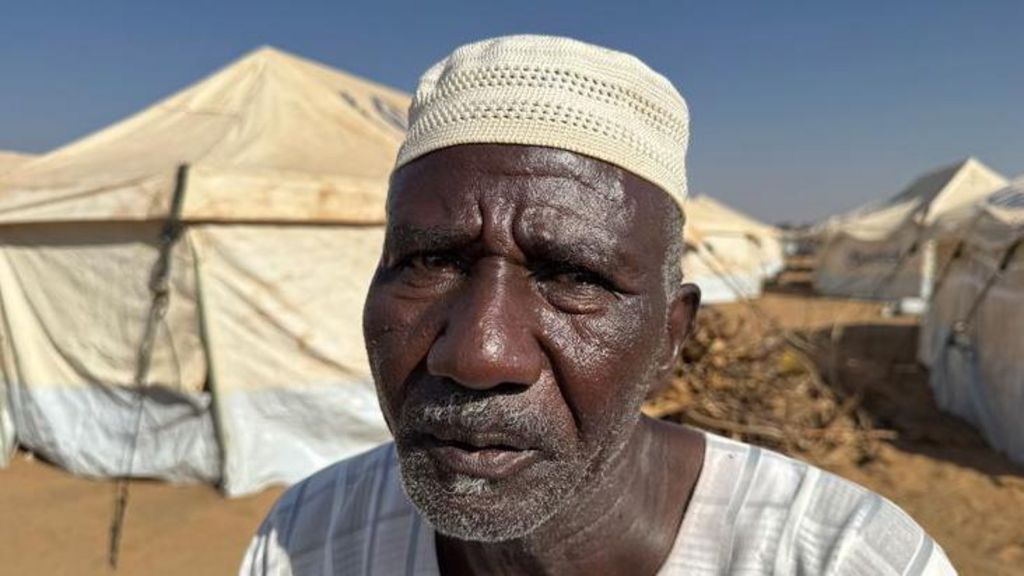
In the aftermath of el-Fasher’s capture by Sudan’s paramilitary Rapid Support Forces (RSF), survivors have provided harrowing testimonies of systematic atrocities committed against civilians during the city’s fall. After an 18-month siege that culminated in October, the strategic Darfur city witnessed what victims describe as targeted violence against unarmed populations attempting to flee.
Abdulqadir Abdullah Ali, a 62-year-old diabetic who suffered permanent nerve damage during the siege due to medication shortages, recounted how RSF fighters fired live ammunition at fleeing civilians. “They were shooting at the people – the elderly, the civilians, with live ammunition, they would empty their guns on them,” Ali stated from a northern Sudan displacement camp where BBC journalists documented accounts under official monitoring.
The humanitarian crisis has reached catastrophic proportions, with United Nations estimates indicating over 260,000 former el-Fasher residents remain unaccounted for. Those who escaped describe nightmarish journeys through multiple RSF checkpoints where extortion, sexual violence, and executions were commonplace.
Mohammed Abbaker Adam, a local official who grew a white beard to appear older and avoid suspicion, described witnessing summary executions: “They shot some people directly in front of us and then carried them and threw them far away. On the road, we saw dead bodies out in the open, unburied.”
Multiple accounts corroborate widespread sexual violence, with fighters allegedly separating women from groups behind trees or taking them out of sight. One 19-year-old survivor described how RSF members abducted a girl from her travel group at a checkpoint, forcing the others to continue without her.
The RSF has denied systematic abuses through Dr. Ibrahim Mukhayer, an adviser to RSF leader Gen Mohammed Hamdan Dagalo. “Any RSF member proven responsible for wrongdoing will be held fully accountable,” Mukhayer stated, characterizing allegations as politically motivated media campaigns.
However, evidence gathered from displacement camps near al-Dabbah, approximately 770km northeast of el-Fasher, reveals consistent patterns of violence. Young men faced particular suspicion of being soldiers, with 15-year-old boys subjected to hours of interrogation under threat of whipping and execution.
The crisis has drawn international condemnation, with the United States previously determining the RSF committed genocide in Darfur. President Donald Trump has promised increased involvement in ceasefire efforts, though survivors remain focused on immediate survival in camps where they arrive stripped of possessions and resources.
As families struggle to reunite and secure basic shelter, the fall of el-Fasher represents both a strategic victory for the RSF and a humanitarian catastrophe that continues to unfold across Sudan’s devastated landscape.