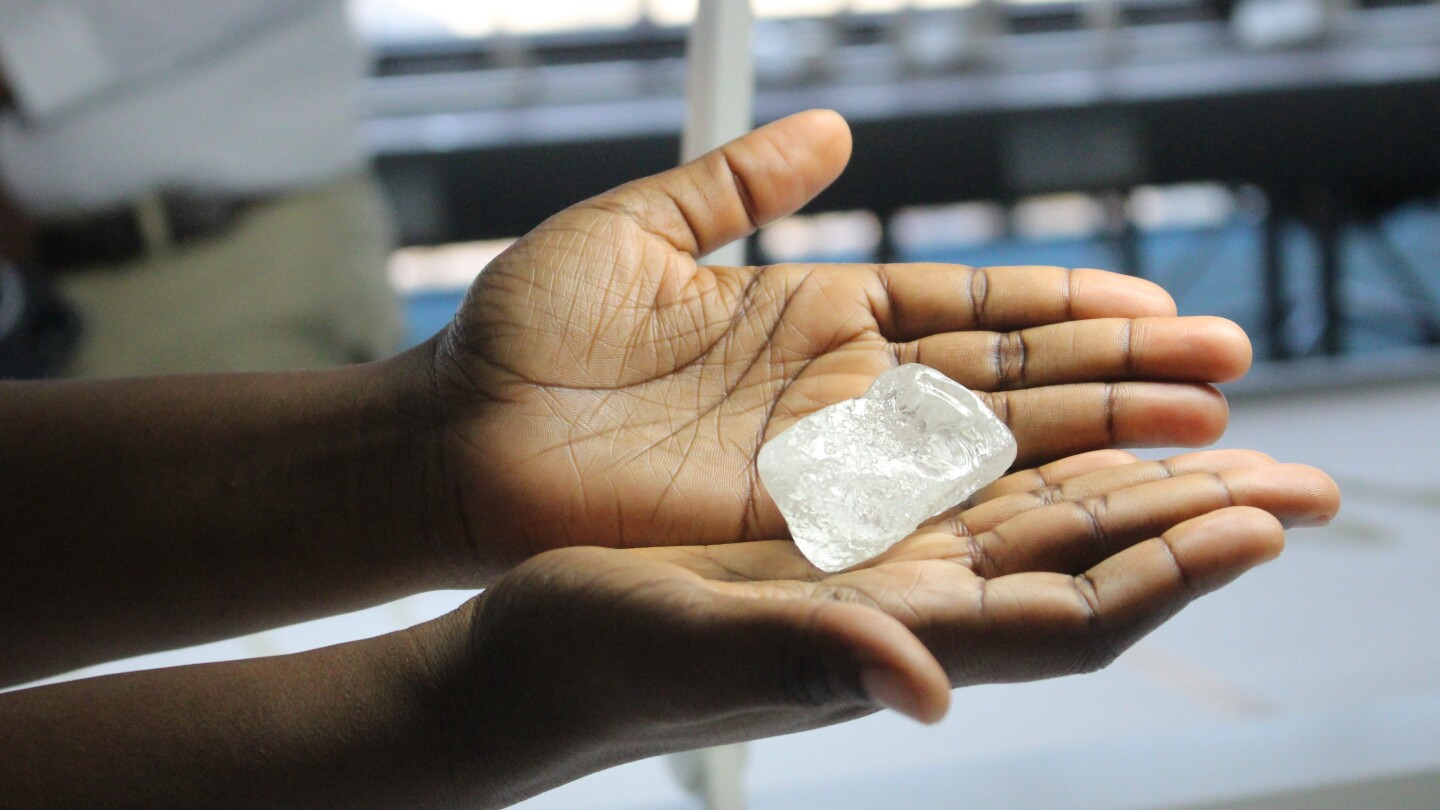
GABORONE, Botswana — Botswana’s diamond-dependent economy, once celebrated as Africa’s remarkable success story, now confronts an existential threat from the rapid ascent of laboratory-grown diamonds. This seismic shift in the global gem market has triggered widespread job losses, economic contraction, and urgent calls for diversification in a nation where diamonds fundamentally shaped national development.
For Keorapetse Koko, a 17-year veteran diamond polisher recently laid off from her position, the crisis manifests as personal financial devastation. “I have debts and I don’t know how I am going to pay them,” lamented the mother of two, who previously earned approximately $300 monthly with medical benefits—a respectable income in a country where the average monthly salary hovers around $500. Her specialized skills, honed over nearly two decades, now render her unemployable in a contracting industry.
Botswana’s diamond narrative began with a transformative 1967 discovery, just one year post-independence, catapulting the nation from profound poverty to becoming the world’s foremost diamond producer by value. The gems financed critical national infrastructure, healthcare systems, and educational institutions, deftly avoiding the ‘resource curse’ that plagued many mineral-rich African counterparts.
However, the industry now faces compounded challenges. Lab-grown diamonds, primarily mass-produced in China and India, now command nearly 20% of global market share—a dramatic surge from merely 1% in 2015. These synthetics, marketed as ethical, eco-friendly alternatives priced up to 80% lower than natural stones, have particularly captured younger consumers through sophisticated social media campaigns and celebrity endorsements from figures like Billie Eilish and Pamela Anderson.
The economic repercussions are severe: Diamond exports, constituting approximately 80% of Botswana’s foreign earnings and one-third of government revenue, have plummeted. Debswana, the dominant local producer jointly owned by the government and De Beers, witnessed revenues halve in the past year. Second-quarter diamond production crashed by 43%—the steepest decline in Botswana’s modern mining history—with the World Bank projecting a 3% economic contraction for 2024.
Southern African nations are mounting a coordinated response. Botswana, Angola, Namibia, South Africa, and Congo have agreed to allocate 1% of annual diamond revenues toward a global marketing initiative led by the Natural Diamond Council. This effort promotes natural diamonds as “Real. Rare. Responsible” through campaigns featuring actress Lily James, attempting to reestablish their unique value proposition.
Botswana’s government has initiated a sovereign wealth fund to pursue economic diversification beyond mining, though details remain vague. The nation’s substantial tourism sector—featuring elephant-based attractions—and other mineral resources including gold, silver, and uranium now assume heightened importance.
Yet for displaced workers like Koko, these strategic shifts arrive too late. “I was the breadwinner in a big family,” she reflected. “Now I don’t even know how to feed my own.” Her poignant reality underscores the human dimension of an industry in transformation: despite dedicating her career to diamonds, she never owned one herself, as even the smallest stone remained an unaffordable luxury.