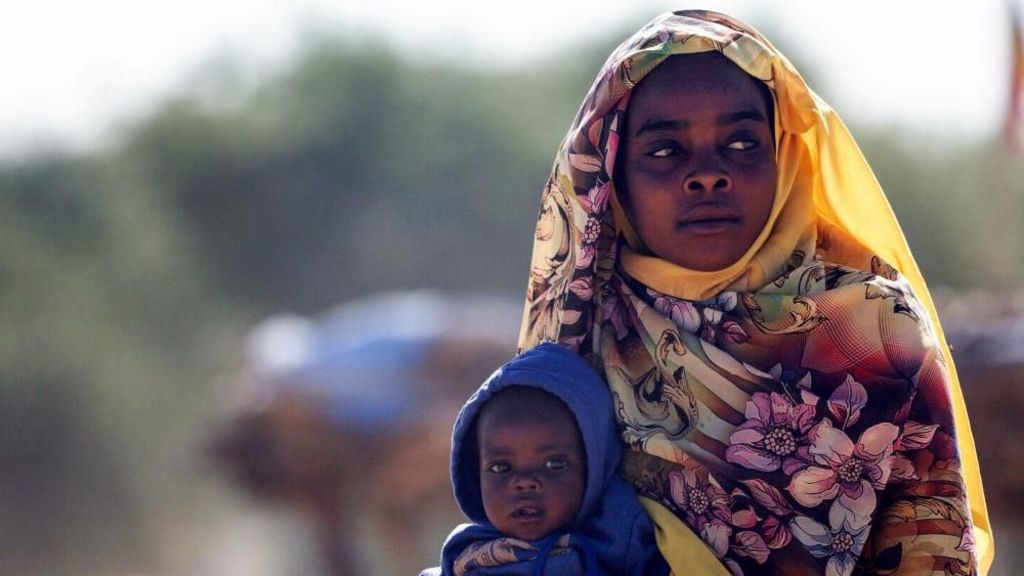
After enduring thirty months of devastating civil war, Sudan stands on the brink of collapse with previous international peace initiatives failing to achieve breakthrough compromises. The conflict has displaced nearly 12 million people and created famine conditions across multiple regions, leaving citizens questioning whether the global community acknowledges their suffering.
A potential shift emerged when Saudi Crown Prince Mohammed bin Salman personally briefed U.S. President Donald Trump on the crisis during a White House meeting. Following their discussion, Trump publicly acknowledged the ‘tremendous atrocities’ occurring in Sudan, which he described as ‘the most violent place on Earth,’ and committed to collaborate with Egypt, Saudi Arabia, and the United Arab Emirates to end the violence.
This development comes amid escalating brutality in the conflict. In late October, paramilitary Rapid Support Forces (RSF) captured el-Fasher, the army’s final stronghold in Darfur, following a 500-day siege. The capture was accompanied by widespread atrocities, including ethnically targeted massacres that claimed over 5,000 lives, with RSF fighters circulating ‘trophy videos’ of their actions on social media.
The war originated in April 2023 from a power struggle between Armed Forces Chief Gen Abdel Fattah al-Burhan, who leads the UN-recognized government, and RSF commander Gen Mohamed Hamdan Dagalo (Hemedti) over Sudan’s political future. Despite Hemedti’s post-victory ceasefire offers, Burhan’s faction has rejected compromise, particularly the Islamists within his coalition who demand complete defeat of the RSF.
Regional powers have exacerbated the conflict through weapon supplies: Egypt and Turkey support the regular army, while multiple reports indicate the UAE arms the RSF, though Emirati officials consistently deny these allegations. This external involvement has created a complex geopolitical landscape that peace efforts must navigate.
For six months, U.S. Secretary of State Marco Rubio and Senior Africa Advisor Massad Boulos have developed a three-point peace framework through the ‘Quad’ mechanism (U.S., Egypt, Saudi Arabia, UAE) featuring: an immediate ceasefire, humanitarian access, and civilian-led transition negotiations. However, the RSF’s assault on el-Fasher undermined these diplomatic efforts.
Trump’s personal involvement potentially strengthens the Quad initiative, as he maintains unique relationships with regional leaders. However, significant obstacles remain, including the fierce Saudi-Emirati rivalry for influence across the Arab world, differing approaches to Islamist groups, and competing priorities that place Sudan behind issues like Gaza and commercial interests.
Effective peacemaking would require convincing the UAE to cease its alleged support for the RSF—a challenging proposition given Abu Dhabi’s status as a major U.S. investment partner and architect of the Abraham Accords. The U.S. has avoided public criticism of Emirati actions and shows no appetite for sanctions, preferring quiet diplomacy instead.
Even if a ceasefire is achieved, humanitarian challenges loom large. Aid organizations require approximately $3 billion for immediate relief, while political solutions must address deep public distrust of military leaders and civilian demands for democracy following the 2019 revolution that ousted longtime ruler Omar al-Bashir. Many Sudanese also fear that Arab-led mediation might reduce their nation to dependency status rather than achieving genuine self-determination.