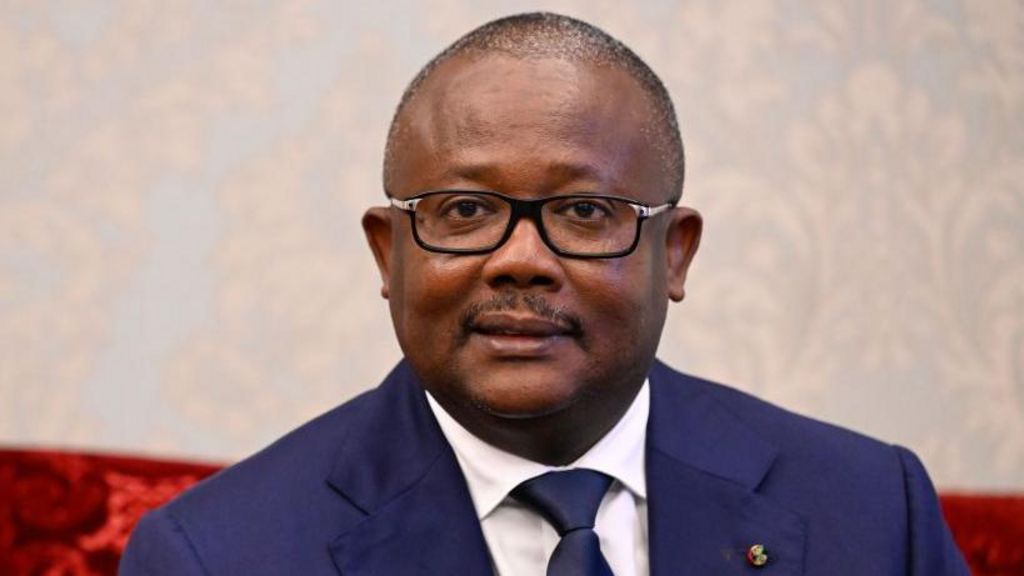
In a significant political development, ousted Guinea-Bissau President Umaro Sissoco Embaló has safely arrived in Senegal after being released by military forces that overthrew his government. The Senegalese foreign ministry confirmed his arrival via chartered military flight late Thursday, describing the deposed leader as being in good condition.
The transfer followed intensive negotiations by the Economic Community of West African States (ECOWAS) amid escalating tensions in the coup-prone nation. Meanwhile, the military junta has installed General Horta N’Tam, the army chief of staff, as transitional leader for a one-year period. The coup occurred just one day before authorities were scheduled to announce provisional results from Sunday’s presidential and parliamentary elections.
The military leadership has justified its actions by claiming to thwart a destabilization plot involving unnamed politicians allegedly supported by a prominent drug baron. In response to the crisis, the junta has suspended the electoral process, blocked result announcements, implemented a night-time curfew, and initially sealed the nation’s borders—though these were subsequently reopened following General N’Tam’s swearing-in ceremony.
International organizations have uniformly condemned the power grab. ECOWAS has suspended Guinea-Bissau from all decision-making bodies until constitutional order is restored, while the African Union and United Nations Secretary-General Antonio Guterres have called for immediate restoration of democratic governance. The UN leader expressed deep concern about the situation and demanded unconditional return to constitutional order.
This marks at least the ninth successful or attempted coup in Guinea-Bissau since gaining independence from Portugal in 1974. The small West African nation, situated between Senegal and Guinea, has long struggled with political instability and has gained notoriety as a significant hub for international drug trafficking operations.