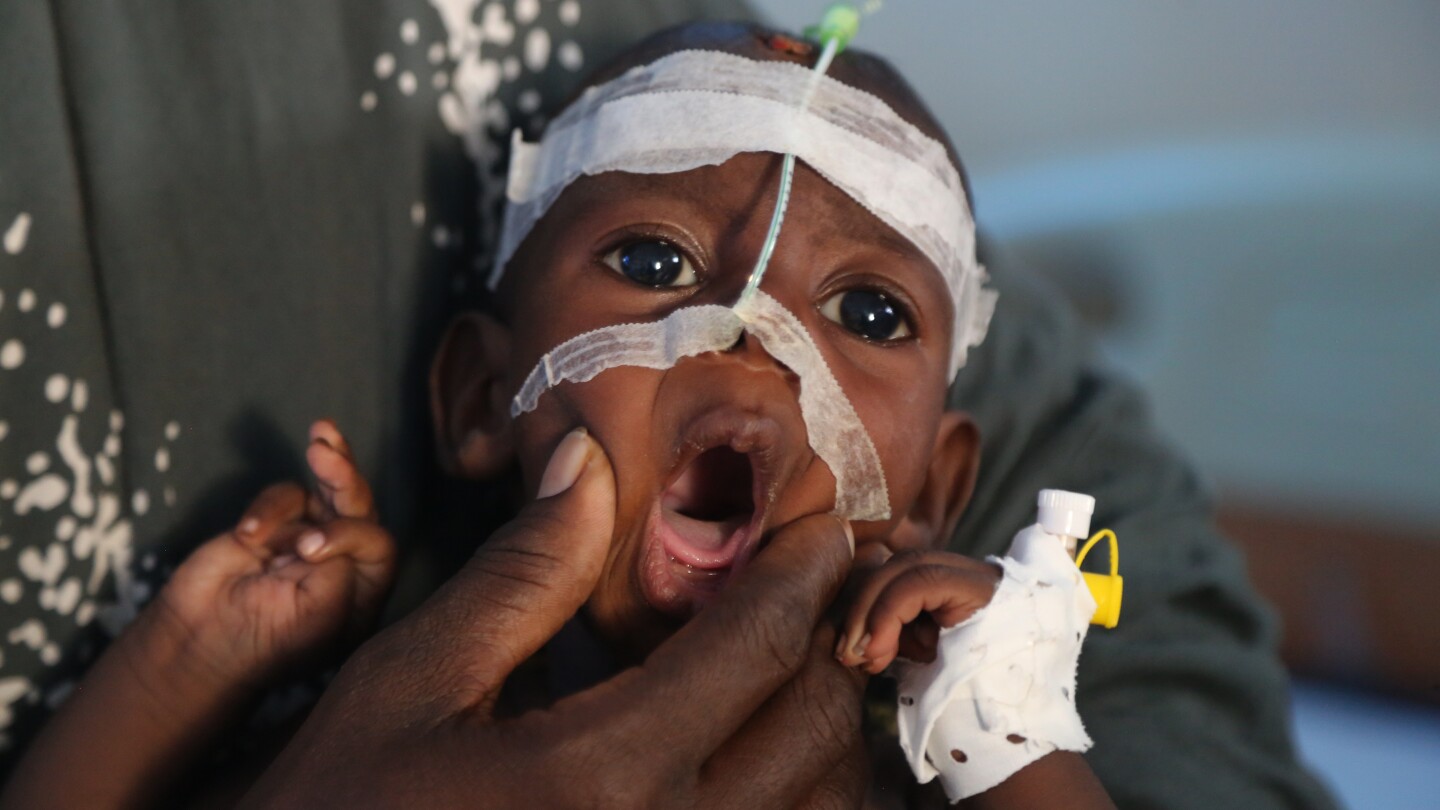
MOGADISHU, Somalia — The precarious state of Somalia’s healthcare system has been thrust into sharp relief following drastic funding cuts from international donors, particularly the United States. The termination of USAID support has triggered a cascade of failures across the nation’s medical infrastructure, leaving vulnerable populations struggling to access basic care.
Yusuf Bulle’s journey from rural southern Somalia to Mogadishu exemplifies the desperate measures families must take for medical treatment. His severely malnourished three-year-old son survived only after a 15-day stay at Banadir Hospital—a facility that remains operational primarily through international partnerships. “Where I come from, there is no hospital,” Bulle stated, highlighting the healthcare desert that characterizes much of the countryside.
The Trump administration’s dissolution of USAID programs this year has resulted in over 6,000 healthcare workers losing their jobs and approximately 2,000 medical facilities facing operational challenges, according to Deputy Health Minister Mohamed Hassan Bulaale. This represents a catastrophic blow to a nation already ranked among those most vulnerable to donor withdrawal by the Center for Global Development.
Despite recent security gains against al-Shabab militants through President Hassan Sheikh Mohamud’s “total war” campaign, hospital administrators and civic leaders report that the government’s singular focus on security has come at the direct expense of healthcare and other essential public services.
Somalia’s healthcare system operates on a precarious financial model. The Ministry of Health received $91 million in this year’s national budget—a significant increase from last year’s $52 million—but almost entirely comprised of donor funds tied to specific projects. Mahad Wasuge of Somali Public Agenda think tank notes that “security remains the first priority” for authorities, even as foreign support diminishes from key benefactors including Britain.
Historical institutions like Chinese-built Banadir Hospital (1977) and Italian-established De Martino Hospital (1922) now depend critically on United Nations and humanitarian organization support. At Banadir’s malnutrition unit, supervisor Dr. Mohamed Haashi revealed that 37 staff positions were eliminated due to U.S. cuts, with Concern Worldwide currently funding the remaining 13 positions along with essential nutritional supplies.
The situation at De Martino Hospital illustrates the systemic challenges. Director Dr. Abdirahim Omar Amin expressed concern about impending funding crises when contracts with humanitarian groups expire in 2025. The hospital currently treats numerous diphtheria cases—a vaccine-preventable disease now spreading in rural areas where parents fear militant attacks during vaccination trips.
“Donors are fatigued,” Amin observed, gesturing to laboratory equipment entirely acquired through international funding. While most services remain free through support from the International Rescue Committee and Population Services International, the hospital technically belongs to the Ministry of Health, which provides minimal direct support.
The deputy health minister acknowledged developing contingency plans with partners but provided no specifics. The challenges are deeply rooted in Somalia’s history—De Martino Hospital once sheltered displaced people after the 1991 fall of dictator Siad Barre, when many public facilities were destroyed during civil war.
Despite support from African Union peacekeepers, U.S. airstrikes, and security consultants from nations like Turkey (which funds an ICU-equipped hospital in Mogadishu), the federal government struggles to assert authority. As Wasuge notes, even functional public hospitals “don’t get direct government budget that allows them to provide better healthcare services.”
National assembly representative Mohamed Adam Dini criticized the government’s “deficient” priorities, noting that “a lot of diseases have been spreading unchecked” due to the absence of both a national healthcare plan and a comprehensive political strategy. For unemployed mother Amina Abdulkadir Mohamed, who recently delivered at De Martino Hospital, the choice was simple: “I was told there is free medication.” In a nation where healthcare remains a privilege rather than a right, such institutions represent the last line of defense for Somalia’s most vulnerable citizens.