Nigeria confronts a complex security landscape extending far beyond recent mass abductions, challenging international oversimplifications of its crises. The nation’s security apparatus—comprising 400,000 military personnel and 370,000 police officers—struggles to contain multiple overlapping threats across its vast territory, which exceeds the combined area of France and Germany.
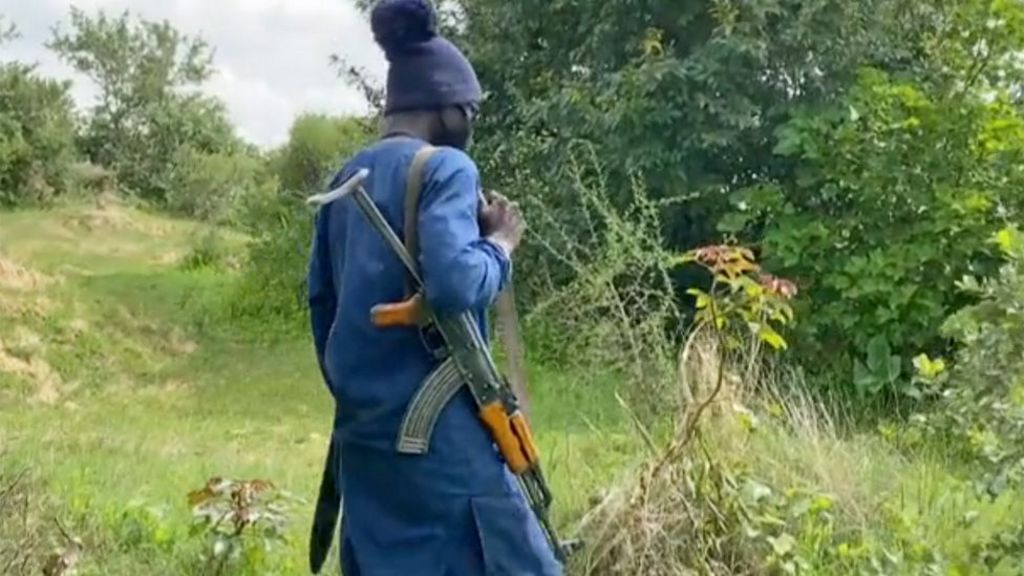
In the northwest, criminal factions dubbed ‘bandits’ operate with sophisticated mobility. Predominantly from the Fulani ethnic group, these groups have transitioned from pastoral livelihoods to armed criminality using weapons proliferated after Libya’s 2011 collapse. Their tactics involve large-scale motorcycle deployments for rapid strikes and escapes, exemplified in recent school abductions. Though lacking centralized leadership, notable figures like Ado Aleru and Bello Turji have bounties placed against them, with the government designating these groups as terrorists in 2022.
The northeast remains plagued by Islamist insurgencies. Boko Haram gained global notoriety through the 2014 Chibok schoolgirl abduction and maintains operations despite factionalization. Its splinter group, Islamic State West Africa Province (Iswap), emerged around 2016 rejecting excessive violence against Muslims and focusing on military targets. Both groups continue operating despite internal conflicts, with Iswap recently ambushing and killing Brig Gen Musa Uba in Borno state.
Central regions experience persistent farmer-herder conflicts primarily over land and water resources, often mischaracterized as religious conflicts. Urbanization has disrupted traditional grazing routes, fueling cycles of retaliation that have spawned ethnic militias engaging in criminal activities.
Southeast separatist movements continue advocating for Biafran independence, with the Indigenous People of Biafra (Ipob) and its armed Eastern Security Network implicated in violence against civilians and security forces. Recent convictions of leaders Nnamdi Kanu (life sentence for terrorism) and Simon Ekpa (Finland conviction) have not fully dismantled these networks.
New militant groups compound these challenges. Ansaru operates around Kainji Lake National Park with Islamic State connections, while Lakurawa imposes strict Islamist controls in northwestern border regions. Most alarmingly, Jama’at Nasr al-Islam wal Muslimin (JNIM)—already dominant in Mali and Burkina Faso—may be establishing Nigerian operations with claimed attacks in Kwara state.
The complexity of Nigeria’s security situation defies simplistic religious framing, involving criminal opportunism, ideological extremism, resource competition, and separatist ambitions across multiple regions simultaneously.