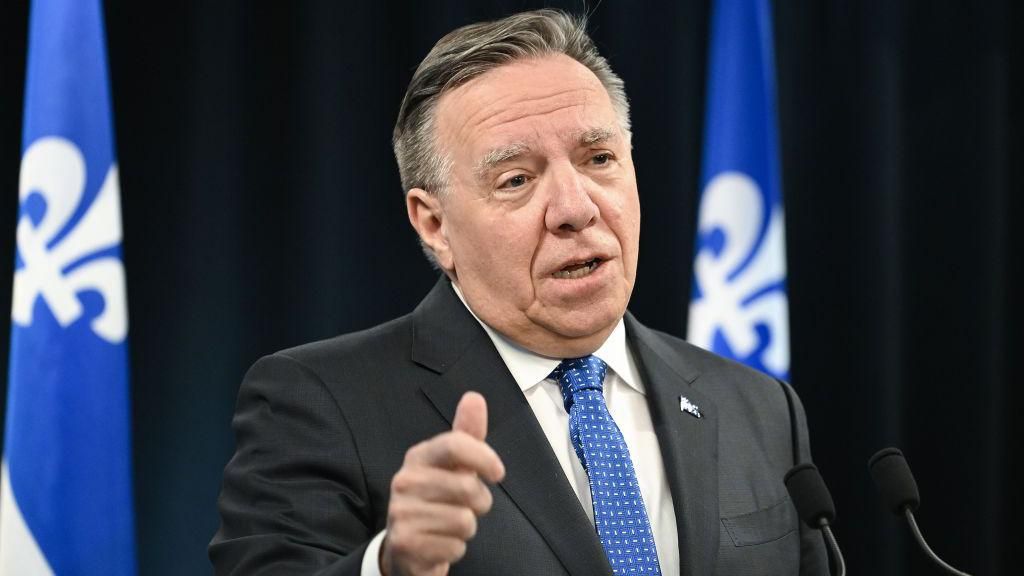
The Quebec government has unveiled sweeping new secularism legislation that significantly expands restrictions on religious expression in public spaces. The Coalition Avenir Québec government introduced Bill 9 on Thursday, marking what officials term ‘secularism 2.0’ – a substantial enhancement of the controversial 2019 religious symbols law that has sparked national debate.
The comprehensive legislation extends religious symbol prohibitions to staff in subsidized daycares and bans unauthorized collective religious practices, including prayer, in public areas such as parks. It further mandates that students and staff from daycare through post-secondary education cannot wear face coverings, while also limiting exclusively religion-based menus like kosher and halal meals in public institutions.
Jean-François Roberge, Minister Responsible for Secularism, defended the measures as balancing individual and collective rights. The government cites recent protests where public spaces were used for prayer gatherings as partial motivation for the new restrictions. ‘It’s shocking to see people blocking traffic, taking possession of public space without permits, and turning our streets, parks, and squares into places of worship,’ Roberge stated.
The legislation builds upon Bill 21, which previously prohibited judges, police officers, teachers and public servants from wearing religious symbols including kippahs, turbans, and hijabs while working. That law invoked Canada’s notwithstanding clause to override certain constitutional freedoms, a move currently facing Supreme Court review scheduled for early next year.
Opposition parties and advocacy groups have strongly criticized the expanded measures. The Parti Québecois accuses the governing coalition of creating social division to bolster support ahead of provincial elections, while the National Council of Canadian Muslims condemned the legislation as ‘doubling down on identity politics and division.’
Secularism (laïcité) has remained a persistent issue in Quebec since the 1960s decline of Catholic Church influence. Recent polling indicates 68% of Quebec residents consider secularism an important value, aligning the province with similar legislation in several European Union nations including France, which implemented religious symbol bans in 2004 and face covering restrictions in 2010.