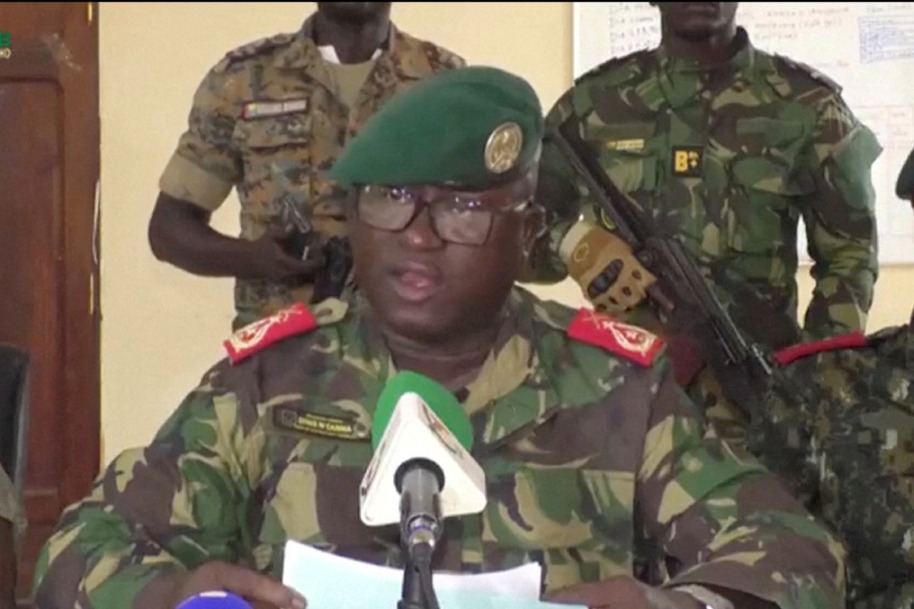
In a dramatic turn of events, Guinea-Bissau’s armed forces declared on Wednesday, November 26, 2025, that they had taken full control of the nation. The announcement, broadcasted on national television, marked a significant escalation in the country’s political crisis. The military, operating under the banner of the ‘High Military Command for the Restoration of National Security and Public Order,’ justified their actions as a necessary response to alleged attempts by certain politicians to destabilize the country. Army spokesperson Dinis N’Tchama stated that the ongoing electoral process had been immediately suspended, and a series of emergency measures were imposed. These measures included the closure of public institutions, suspension of media activities, and the sealing of all land, sea, and air borders. Additionally, a mandatory curfew was enforced from 7:00 p.m. to 6:00 a.m. local time. Reports from local media indicated that heavy gunfire was heard near the presidential palace in Bissau, the capital, around 1:00 p.m. local time. Residents fled the area as military personnel took control of the main road leading to the palace. Military sources revealed that several high-ranking government officials, including Interior Minister Botche Cande, Chief of the General Staff Biague Na Ntan, and Deputy Chief of Staff Mamadou Toure, were detained during the operation. By the time of reporting, Bissau had returned to apparent calm, with a significant decrease in pedestrian and vehicular traffic as the curfew approached. However, a large number of troops remained deployed at strategic locations across the city. The Chinese Embassy in Guinea-Bissau issued an emergency consular alert, urging Chinese citizens to enhance safety precautions, stay informed about local security updates, and avoid unnecessary travel. The embassy also advised citizens to report emergencies to the police and seek assistance from the embassy if needed. The political upheaval occurred just days after Guinea-Bissau launched its presidential and legislative elections, with over 960,000 registered voters set to choose a new head of state and 102 members of the National People’s Assembly.